Sounds like free advertising for Samsung. If the products are good enough that Apple is playing dirty tricks to remove them to the market, maybe I need to reconsider buying a new iPhone when my contract runs out this fall.
I don't think that Apple is playing dirty tricks in this regard. I'm not particularly sympathetic to many kinds of patents that are being enforced these days, but Samsung is clearly trying to make slavish copies of Apple products, and Apple certainly is entitled to defend themselves against this.
I might not have been so sympathetic to Apple in this regard if I hadn't been fooled by Samsung products myself. E.g., a few months back I was in a Costco and saw a new iPad on display. I found this surprising, as I wasn't aware that there was a new iPad. I picked up the iPad and fiddled with it for a minute. I found it confusing, because it was so much like the iPad I had at home, except that some things were different in a way that I didn't expect. After a minute, I finally realized that this wasn't an iPad at all, but rather a Samsung tablet that had been designed to mimic the iPad in many important details.
I also recall seeing a TV show in which someone was speaking on an iPhone, only it wasn't any model of iPhone that I had seen before. I figured that it must have been a prop iPhone as perhaps Apple hadn't wanted to pay for the product placement in this episode. I vaguely recalled Apple suing Samsung over design patents and so I Googled for a minute. Sure enough, the "prop iPhone" was a real Samsung phone!
You can't knock-off a Chanel handbag. Why should you be able to knock-off an iPad or an iPhone?
Anyone who claims that Samsung isn't intentionally stealing Apple's design for their own profit is being disingenuous. And anyone who claims that Samsung couldn't easily differentiate their design from Apple's design is also be disingenuous. Other Android phones and tablets are not such slavish copies, and this is why Apple is going after Samsung, rather than other phone and tablet manufacturers.
> You can't knock-off a Chanel handbag. Why should you be able to knock-off an iPad or an iPhone?
I'll admit I'm not clear on US law, but aren't there some clothing makers who 'take inspiration' from high-end designer pieces and do very similar designs for the mass market? As long as they aren't labeled incorrectly, they don't seem to get into trouble.
(Not that this applies to this case, since I highly doubt most people would mistake Samsung phones for iPhones, not after a minute or two of using them. You yourself realised the devices weren't iOS in no time. In every mobile shop I walk into here, there are big Samsung signs and iPhone/iPad signs at the appropriate counters, and basically everyone knows what they're getting.)
Why should the icon layout or organisation of a mobile phone OS be protectable in the first place? All the old phones of yesteryear had icon menus as well. Or is sliding-screen navigation protected as well?
> I'm not particularly sympathetic to many kinds of patents that are being enforced these days, but Samsung is clearly trying to make slavish copies of Apple products, and Apple certainly is entitled to defend themselves against this.
Are you conflating patents with copyrighted design here? And how does the Galaxy Nexus 'slavishly' look or feel like an iPhone?
IANAL, so I'm not arguing from legal principles, but from moral ones. If you want to sell something, you should sell something that is yours, not someone else's. Apple's design belongs to Apple, not to Samsung, and consequently, Samsung should not be allowed to sell it.
People who disagree with this, I guess, must somehow feel that design is a much easier task than writing software, and therefore design should be free. (Either that or you think that all software should be free too, but then we'll have to agree to disagree.) The reality of the matter is that good design is very difficult and very expensive. Why should Apple go to all the expense of developing a great design, just to have it stolen?
Re legal principles, there are such a thing as design patents, in addition to look-and-feel copyrights, though I have no opinion on their legal merits in general. As to how Apple will progress with this legal battle, I'm sure they will use any and all legal tactics that they believe will be effective. If one asserts that they might set some bad precedent in doing so, for all I know that may very well be the case. If it turns out this way, then Samsung is equally to blame for stealing Apple's design work.
Regarding the Nexus, I can't say. The Samsung phone I saw in a TV show that clearly IS a slavish copy is this one, or one very similar.
http://goo.gl/dJazg
Clearly the "Samsung" logo gives it away, but that was covered up in the TV show. In any case, even if a logo allows you to quickly distinquish a product, I believe that Apple is certainly justified in defending against such slavish copies. In fact, any company would defend its design as Apple is doing, even if it were moral to make such slavish copies as Samsung is doing, so railing against Apple here is just railing against what any company would do.
> Apple's design belongs to Apple, not to Samsung, and consequently, Samsung should not be allowed to sell it.
I'm not sure that sole rights to a design is a moral principle. Imitating is the very basis of most design anyway - we take ideas from places and things we've seen and build upon them. If you acknowledge that designs don't occur in a vacuum, that they don't spring purely from the mind of the designer without outside influence, then maybe it's not morally wrong to take design elements from anything else, even a competing product. (The question of degree, however, is another matter.)
Product differentiation is heavily emphasised in marketing courses because it offers a competitive advantage over similarity. But that doesn't imply products need be differentiated in the first place.
Basically, IMO, companies can rail all they want about their designs being imitated, but the law shouldn't stop the appropriation of design elements -- except when it crosses the line into fake products, i.e. when there is intent to trick consumers into thinking a fake is the real thing. Taking the (perceived) pleasing aspects of a design should not be illegal.
I don't know, if it were a big company imitating the design of a small but up-and-coming rival, I would be more sympathetic to the small company, and maybe my stance would be different. But 'copying' design is not something that seems intrinsically wrong to me. I take design elements from other websites when I work on my project, and I wouldn't be able to blame another website if it took elements from me. If it imitated my design wholesale, I'd feel bemused and flattered, maybe angry if they were beating me at my own game, but I'd accept it as part of the game.
In this case, the Samsung phones I've had experience with have not looked like my iPhone 3GS, so I cannot agree that they slavishly imitate Apple's designs. The Galaxy S you linked does look similar, but the other Samsung phones I've seen do not (unless you consider rectangles with rounded corners to be sufficiently similar).
I was referring to the physical aspects of the device more than anything else, though the home screen was also remarkably like iOS. All the icons looked a bit wrong, which caused the confusion that led me to more closely examine the physical device, looking for an Apple logo.
As to not being able to tell the difference between iOS and Android, I've never used Android, so I couldn't say. I have seen my friends using their Android devices, and all I can say about that is that their devices have looked rather blocky and cartoonish to me. The Samsung home screen did not have the Android blocky cartoonishness to it--it was much more iOS-like.
As to your claims about how my post "feels", please take your feelings and place them somewhere appropriate.
>As to your claims about how my post "feels", please take your feelings and place them somewhere appropriate.
That's uncalled for. I was being polite in my choice of words. Let me spell it out for you: Your story is the type of story a lawyer would write, to make a case in a front of a jury. Convincing in the mind, but totally unrealistic in reality. We could grab strangers from the street, and they would be able to tell the devices apart in a heartbeat.
For starters, the aspect ratio of Samsung devices and Apple devices is completely different. Yes, both products have rounded corners. Exactly like any other every mobile device in the last 20 years, because otherwise they would tear your clothes. Yes, they are as flat as they can be: again, not suprising.
There is often only one natural, optimal way for a vendor to engineer a device using the components that can now be produced at full-scale. The reason Samsung and Apple products look so much alike, is because they contain pretty much the same components: Apple products are essentially Samsung products with an Apple logo slapped on them. From the screens, to the chipsets.
So, for their products to look more alike is not that weird: they have been designed for the exact same set of limitations. (the form factor of Samsung components)
Finally, fashion does exist, and it is not owned by whoever happens to set the trend. From high heels, to low cut jeans, that's not so much copying designs, as it is about market research and listening to your customers.
And the right to 'own' a design requires that design to be superfluous. The three adidas bars are protected. The nike logo is protected. But nobody can sell a white T-shirt, and claim that design their own.
You can own branding. Copying designs is illegal only when it actually leads to consumer confusion, as an extension of trademarks. Apple isn't trying to own its design: it trying to own the whole concept of minimalism. That's function over form: and I personally love that, but you can't expect society to give any company a monopoly on minimalism.
Everybody is allowed to produce a white T-shirt. But only one company is allowed to put an apple on the back of that shirt.
> That's uncalled for. I was being polite in my choice of words.
And I wasn't? You effectively called me a liar, and yet I didn't tell you to fsck off. I gave you every choice about other uses for your thinly veiled accusation.
> Let me spell it out for you: Your story is the type of story a lawyer would write, to make a case in a front of a jury. Convincing in the mind, but totally unrealistic in reality.
I-A-N-A-L
F-U
>We could grab strangers from the street, and they would be able to tell the devices apart in a heartbeat.
If you say so. I guess I'm just stupid compared to strangers from the street, then?
> So, for their products to look more alike is not that weird
This is the type of thing a lawyer would write to be able to make a case in front of a jury. Do you work for Samsung? It feels to me like you are a paid shill for them, protecting their reputation on the internet.
Let me spell it out for you: The similarity between the iPad and the Samsung tablet was not accidental. The Samsung device was a slavish copy. This fact is well-proven by the fact that there are plenty of other tablets out there and none of the others are readily confusable with an iPad.
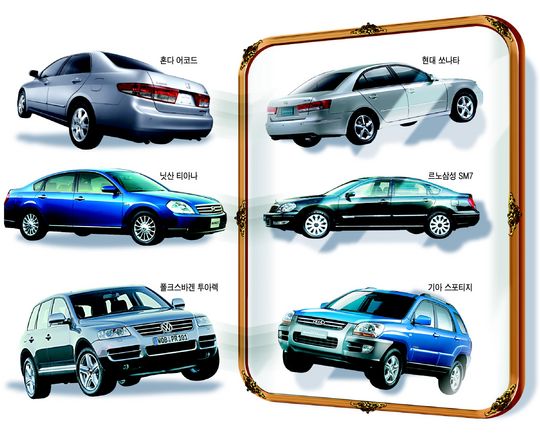
There's some Hyundais and/or Kias that look awfully like Jaguars and BMWs. You'd do a double take in the street. Do the aped companies wage a public battle against them? No, they know their quality speaks for itself.
I have never seen two brands of cars that I couldn't distinguish in a second or two, any double-takes notwithstanding. It would not take me a minute. Nor have I seen two models of cars that were slavish copies. When the day comes that all tablets look almost exactly like iPads, and our brains have adapted to telling the brands apart from whatever subtle differences they possess, you might have a point. In the meantime, Samsung is clearly trying to sell their tablets based on making them as indistinguishable from an iPad as they can get away with making them.
I don't see how anyone can support this business model. If they were an honest company, they would market their tablet on its own merits, not on how much they can cause brand confusion, or on how closely they can mimic another company's design.
I'm not interested in defending Samsung here, but I do agree with the posters upthread that Apple's actions do show a certain amount of insecurity. Again - did Mercedes-Benz or Jaguar say anything about the Amanti?
Certain cars have a very distinctive look, and intentionally so. If another company were to try to make a car that slavishly tried to copy their distinctive look, then I think the first car company would have every right to sue the second car company. E.g., if another company were to make a car that would take you a minute to notice the difference between it and a Nissan Cube, then Nissan would be well within its rights to sue.
On other other hand, some cars are made to look "just like every other car". Clearly for the cars that are doing this, there is nothing to sue about.
The Jaguar has a very distinctive front-grill. The rest of the car is less unique, but if someone were to copy the Jaguar down to the front grill, then Jaguar should sue.
The Mercedes is not very distinctive to my eye, other than the prominent round Mercedes ornament on the hood. If another car company were to make a luxurious-looking car with a round peace-sign ornament, for instance, on its hood, then Mercedes should sue.
As to whether car companies sue each other in practice, I have no idea. I'm sure they would, however, if they felt that (1) another car company were making a slavish copy of their design, (2) they had a good chance of winning the court case, and (3) the suit wouldn't somehow hurt their image too much.
Fashion can't be trademarked or copyrighted. You can slavishly copy a Chanel handbag if you don't also copy the logo. That's why many expensive brands use their logos in patterns on their handbags.