Because the US endorses the concept of "essential patents," meaning you need to pay a licensing fee to be lawfully allowed to perform the math that transforms data into A/V content.
Never to mention the two blatant issues with this, being:
1) video codecs are the exemplary "we'll patent math and there's nothing you can do about it" scam, since that's literally all a video codec is
2) a process being "essential" to a particular outcome (i.e. no other way to do it) was the main motivation mathematics was explicitly excluded from patentability in the first place, so the idea of "essential patents" just underlines the absurdity of the entire system
Anyways, yearly reminder that software patents are a blight to innovation and a scourge on our industry, and no you won't change my mind.
The specification for the format (which is what is patented) describes the mathematical relationship between the binary payload and the uncompressed picture data. The actual implementation of the encoder / decoder is copyrighted and may also be patented, (which seems to be what you are alluding to), but with patent encumbered formats, the real issue is that the specification itself is patented.
Practically this means that every encoder / decoder for patent encumbered formats has to have some form of licensing just to interact with the format even if they somehow reverse engineered the specification and built a cleanroom implementation (at least as far as I understand it, IANAL)
I am well aware of the foundations of CS and the lambda calculus, but this is more than a bit reductionist, like saying "everything is made of subatomic particles."
Patents on processes and methods are pretty common. Dismissing it as "they just patented some math" and then falling back to saying "oh, lambda calculus" -- I think you can do better :-)
Almost all inventions can be reduced to "just math", because after all, that's what we use to describe the physical world, and oh also computer software things.
I'm not in favour of patents at all, but the entire "it's math" argument has always seemed exceedingly weak to me.
These files have carefully constructed format though. To read and write the patented format goes beyond patenting math. I think cmrdporcupine was getting at something.
It definitely is. Church Turing thesis basically states that all systematic procedures can be encoded as math. So, software can be encoded as math yes, but also music can be encoded as math. Life can be encoded as math (which is what our DNA is).
Rather than providing a basis of not allowing software to patented, I think it makes the statement "X can be encoded as math" trivially true - and therefore uninteresting.
In so far as there is value in patents on any systematic procedure at all, the position that "software should not be patentable because it can be encoded as math" is completely untenable.
Software is also, in fact, not math. Nor is the math the utility of software.
Software's utility (usually) is the business problems it solves. The processes are encoded as math, and a lot of writing software is about improving those processes, but that is not in fact the utility.
Think of the guy who invented the equi-tempered scale. All throughout history you had to make instruments that are tuned to play in one scale. Now you can suddenly make instruments that can play all of them. Solves a real problem from music by making an improvement in the representation, so it can be viewed as all math. But is it really "just" math?
I picked first US patent listed (US 7,292,636), and it's first claim says
> 1. For a bitstream comprising a first video picture, a second video picture, and a third video picture, a method of decoding comprising: computing a particular value that is based on (i) a first order difference value between an order value for the third video picture and an order value for the first video picture, and (ii) a second order difference value between an order value for the second video picture and the order value for the first video picture; computing a particular motion vector for the second video picture based on the particular value and a motion vector for the third video picture; and decoding at least one video picture by using the computed motion vector.
A patent for a drug is just chemistry, which is also just math with a specific ruleset…
Patents are designed to protect work, especially work where most of the effort is in the research / discovery rather than the implementation.
Implementing a video decoder is relatively easy coming up with the algorithms to encode/decode the video efficiently and effectively however is a lot of work.
There are essential differences between chemistry and mathematics.
To discover anything in mathematics, including a new video compression algorithm, you do not need anything else, except a computer. In theory, not even the computer is needed, as you could do everything with pen and paper, but it might require years or centuries.
Chemistry is an experimental science for now, until someone would find a method to solve the equations of quantum mechanics for non-trivial systems.
A lot of mathematics is used in chemistry but at its base chemistry remains experimental, because all the mathematical models used in chemistry to predict some facts use a large number of model parameters that have been determined experimentally. There are no truly "ab initio" mathematical predictions in chemistry.
Using mathematics in chemistry allows a significant reduction in the number of chemical experiments that must be done to discover anything new, but they cannot be eliminated yet.
Any discovery in mathematics can be easily redone again, by someone else, completely independently, and this actually happens extremely frequently.
There do not seem to exist many reasons that can justify why the later discoverers must be punished to pay money to others in order to use the mathematical relations that they have discovered themselves, even if by some chance someone else happened to discover the same relations earlier.
For mathematical discoveries, there are little grounds to claim that the first discoverer should be able to recover any expenses, as most of the strictly necessary expenses are just in the salaries of people and it is very difficult to estimate what percentage of those expenses had actually contributed to the discovery.
On the other hand, for inventions referring to chemical substances, or to mechanical, thermal or electrical devices and so on, a lot of experiments with physical devices must be made and the experimentation costs can indeed be very high, so it can be argued that it might be good for a society to encourage such experiments by promising a temporary monopoly for the exploitation of the results, as long as the duration of the monopoly is not excessive.
For the kind of minor innovations that are the object of most recent patents, a reduced patent duration seems more appropriate, e.g. 10 years.
A patent duration of 20 years or more seems acceptable only for a few patents for which the acceptance criteria should be much more strict than they have become recently, i.e. such patents should really be "non-obvious for those skilled in the field", and not just trivial combinations of formerly known devices or methods.
You have missed the point, a video encoder isn’t just math anymore than chemistry is just math.
Finding the methods is the discovery and there are a lot of experimental work that goes into video and audio encoding as well including perceptual measurements and actually coming with a method that can be efficiently implemented in both software and hardware.
There are plenty of patents that don’t require nearly as much experimental or hard science work as developing a new encoding method.
This isn’t even about discovering anything new in mathematics although that can happen it’s about a novel implementation which does deserve patent protection whether you like it or not.
If one can literarily get a patent for a new pressure valve with just using a pen and paper or in even a better analogy a purely computerized simulation your argument simply falls apart.
The argument about it being non obvious is also has nothing to do with software as many things in computer science (since that is the field most relevant in this rather than software development) can be very much non obvious to experts in the field too.
And that is the gist of issue here the software implementation isn’t what is actually protected by the patent that might be protected by copy right. The patent itself covers a method which as you said can be implemented even on a piece of paper if you want to do things really slowly.
Designing a video compression algorithm is a purely mathematical task.
However you are right that for comparing different compression methods and for deciding which is the best method of several alternative methods having the same compression ratio, it is far better to do experiments with humans, instead of relying on some mathematical criterion, e.g. the distance between the original signal and the decompressed signal, according to some simple metric.
So I agree that a new video or audio compression algorithm may incorporate some new knowledge about a physical system, i.e. about the perceptual abilities of humans.
However that would justify patenting only some features of the algorithm that have the clear purpose of taking advantage of some characteristics of the human vision which have been newly discovered and described by the patent authors.
The valid claims cannot cover any mathematical tricks to improve the efficiency of the algorithm or any characteristics of the human vision that have already been exploited in the patents for older video compression algorithms.
I am pretty sure that no patent for video compression algorithms restricts itself to such reasonable patent claims.
Regarding software, the main problem is what makes you think that the fact that you happened to be the first to write a program that solves a certain problem, gives you any right to forbid to everybody else to solve the same problem.
It is guaranteed that there are thousands of other programmers who would solve the same programming problem as well as you or even better, without knowing anything about your solution, but they just happened to not face that problem before you.
Any kind of software is a combination of known elements, which have been used for the first time in the early times of the computer industry. Those early algorithms were much more innovative in comparison to the existing practice, than those that are patented now. Had they been patented, no software company, e.g. Microsoft, could have ever appeared and grown.
All those who have patented software in recent years stand on the shoulders of the early programmers who have not patented much more valuable ideas, which are now freely incorporated in the patented software.
I think you lack understanding on what exactly is being patented if you are continuing to repeat the “it’s just math”.
I honestly can’t fathom why software engineers think that they are unique every patent, every invention is built on prior knowledge this is why every patent has a whole section of prior art we all stand on the shoulders of giants.
But again video encoding patents have rarely anything to do with software they are far more generic than that and also predate software by decades.
That doesn't explain why the browsers don't offer hardware decoding but only software decoding. Both implement the same specification. One is just faster (and in hardware which I assume has said license fees paid by the processor manufacturer).
In fact looking at it this way it would be easier to implement it in hardware as you don't just offload the decoding but the whole licensing rigmarole too.
Edit: oops this was already mentioned. Sorry the thread is so long I lost the overview.
IMO the real issues caused by patent encumbered formats is that what is patented is not the software itself, but the format. So instead of patenting a specific implementation of an encoder or a decoder, what is patented here is the relationship between the bits on disk and the pixels on the screen. I think that's what the quoted text is trying to get at.
Formats aren’t patentable as such. The issue is that there is really only ever one procedure for decoding a complex format, and many of the steps / building blocks that go into that procedure might be patented by various entities.
The Church Turing thesis basically states that any systematic procedure can be encoded into math. Software can be encoded as math, yes, but music can be encoded as math. Life can encoded as math (which is what your DNA is).
I really don't understand how the parent commenter fails to see that this makes "X is math" basically a meaningless statement because it is always trivially true and makes their position "math shouldn't be patented" completely untenable.
Encoding the information about some thing in numbers does not make the original thing a mathematical object.
The numbers used to encode some information are mathematical objects and they can be transformed using mathematical functions. You can encode the image of a flower in a bit string and you can compress the image by applying a mathematical function. That does not mean that the flower is a mathematical object.
The sequence of bases of a DNA molecule from the flower records some information about the structure of that DNA molecule, but it is neither the DNA molecule nor enough information to completely clone a living cell (the various cloned animals from experiments are not identical copies, they combine features inherited from the source of the DNA with others inherited from the source of the anucleated cells used to make the clone, the nucleic DNA is the major source of information about a living cell, but not the only one; it is like the source text of a C compiler that still needs a lot of extra information in order to bootstrap it into an executable compiler).
When patent claims are analyzed, it is easy enough to determine if they refer to mathematical methods or to physical things, even when the language of the claims is intentionally confusing.
Originally the concept of patent was applicable only to physical devices, which could be built and demonstrated to work as claimed.
However the acceptance rules have been relaxed in time, allowing more and more abstract patent claims, until it became possible for the first time to patent software, first in USA, and then also in other countries, usually as a result of pressure either from USA or from industry lobbies.
An essential patent covers the way of doing things.
Essential patents in general fail the obviousness test; they cover the solution that most experts in the field would reach in solving the given problem.
> A patent covers a way of doing things. An essential patent covers the way of doing things.
You have absolutely no idea what you are talking about. An essential patent is declared essential to a standard (of which there are many). Take 3GPP, companies like Qualcomm, Apple, Ericsson, Huawei, etc. all spend hundreds of million of $ developing each release of the 3GPP cellular standard. During this development process often times patents are filed (based on the companies contributions). As part of joining 3GPP you have to agree to license this IP on fair, reasonable and non-discriminatory (FRAND) terms. The patents are almost never obvious, as you can see from the lengthy debate over each feature and all of the associated proposals at each 3GPP meeting.
I'm not saying that 'essential' means 'obvious' in any official sense, rather that they generally cover solutions that experts in the field would come to if attempting to solve the problem.
I struggle to see how the patent office could ever uphold the requirement of inobviousness, how could they possibly have expert level domain knowledge across all domains?
So the patents get granted, contextually obvious or not.
I should stop typing while I'm still vaguely on topic, before I start ranting about patent thickets and wilful infringement.


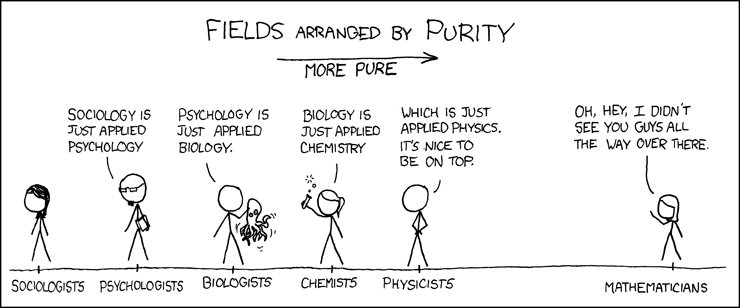
Never to mention the two blatant issues with this, being:
1) video codecs are the exemplary "we'll patent math and there's nothing you can do about it" scam, since that's literally all a video codec is
2) a process being "essential" to a particular outcome (i.e. no other way to do it) was the main motivation mathematics was explicitly excluded from patentability in the first place, so the idea of "essential patents" just underlines the absurdity of the entire system
Anyways, yearly reminder that software patents are a blight to innovation and a scourge on our industry, and no you won't change my mind.