These current fires are much more destructive because of a combination of the extreme conditions, a dense under story from fire suppression and lots of standing dead wood from beetle kill etc.
So ideally for a forest you would have small fires come through regularly and clean up the under brush but leave a fair number of large mature trees standing leading to open fire resistant mature forest.
With these large super destructive fires that wipe out everything you get slower reseeding which can let invasives weeds take hold. And you get dense stands of young trees and brush which are less fire resistant than mature forests.
Partial solutions include controlled burns in the wet season and thinning where you shoot to leave the large mature trees but reduce fuels. (This isn't always commercially viable though developing wood products that can be made from small trees or even brush harvested during thinning is an interesting area.)
> With these large super destructive fires that wipe out everything you get slower reseeding which can let invasives weeds take hold. And you get dense stands of young trees and brush which are less fire resistant than mature forests.
If you're real unlucky an above average wet season after a super destructive fire will cause untold amounts of topsoil erosion and damage, impacting the follow on reseeding even more.
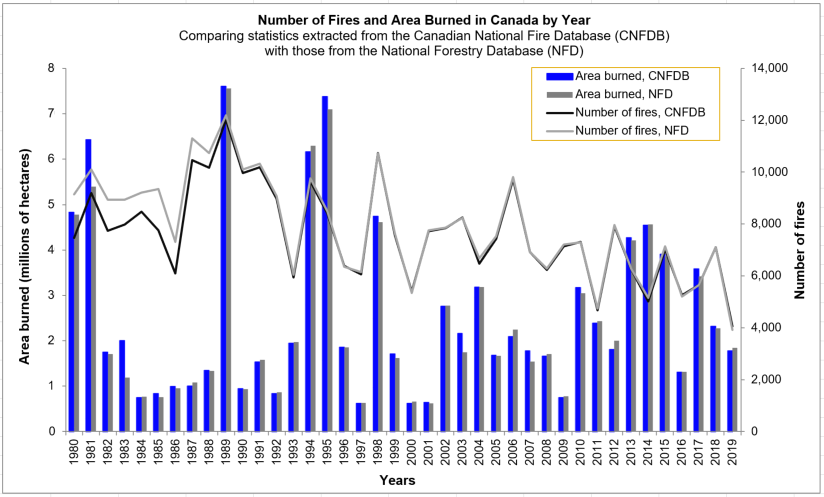
You are correct that there have always been really bad years (that chart doesn't go back very far but look up the great burn of 1910). However total size is effected by us getting better at fighting them.
What has changed is that the fires burn hotter and so fully destroy vegetation and even seeds with intense heat which makes it much harder for the forests to regrow in the way they typically would in a "fire adapted ecosystem": https://www.cpr.org/2020/09/01/colorado-wildfires-forests-re...
In California they absolutely are. Canada has wild land that have been undergoing a natural burn cycle. In the US, fires have been put out, leading to 150 years of built up fuel
Is the increase in beetle kill related to the suppression/reduction in small scale cooler fires? Would be interesting to understand.
In Australia it is only now becoming widely understood that stopping of the indigenous peoples burning of the bush has lead to an increase not only of large destructive bushfires but also a changing of the nature of the plants growing in an area. We are seeing more weeds and certainly more fire prone species which is leading in turn to an increase in the flammable fuel load. With the widespread 2020 bushfires causing so much destruction there has been an increase in appetite for looking at other options for land management, including trying to tap the fading knowledge of the indigenous elders on there traditional practice.


So ideally for a forest you would have small fires come through regularly and clean up the under brush but leave a fair number of large mature trees standing leading to open fire resistant mature forest.
With these large super destructive fires that wipe out everything you get slower reseeding which can let invasives weeds take hold. And you get dense stands of young trees and brush which are less fire resistant than mature forests.
Partial solutions include controlled burns in the wet season and thinning where you shoot to leave the large mature trees but reduce fuels. (This isn't always commercially viable though developing wood products that can be made from small trees or even brush harvested during thinning is an interesting area.)