Honestly this is the worst part of contracting, when two consenting parties can't work together. If I prefer the gig economy and contract work to full-time employment, CA gets in the way. It's been much more challenging trying to get long-term contract work as companies are afraid of me being classified as an employee and then owing the state (or me) taxes and penalities.
I have a skill that adds value to a company. They want to pay me to do it. I agree to the price. What's the problem? According to CA, a lot.
>I have a skill that adds value to a company. They want to pay me to do it. I agree to the price. What's the problem? According to CA, a lot.
Are you arguing that all labor laws, workplace safety laws, minimum wage laws, anti-compete laws and so on should be repealed? After all, they all get in the way of two consenting parties deciding to work together. If not then it's merely a question of where the line is drawn and that's a murky issue.
I know this will sound needling but it’s not, but have you ever been truly poor? By that I mean, have you been in a situation where you don’t know where your next meal is going to come from and you have no belief that anything in the future is likely to change such that that you would have confidence about where your next meal will come from?
I will freely admit my bias: I have been very poor before and I lean towards protections for the most vulnerable in our society at the expense that some people will have to sacrifice somewhat between Uber and their other gig.
I totally agree that we need to protect our poor people from being exploited.
However, I think that trying to place market restrictions on two parties making an agreement is not the right way to go about it.
If we had a stronger social safety net (either something like a UBI, or some other form of economic assistance), we wouldn’t need to try to manipulate the market with blunt restrictions on trade.
There are a LOT of things a market economy is bad at, or simply won’t address... externalities, extreme poverty, taking care of people who don’t produce something that the market will pay for, etc.
Attempting to force a market to address these issues by passing blunt laws is extremely inefficient. If we want to support poor people (which I want to do), we should tax everyone and pay to support them. Then we can let the market do it’s thing and set prices and wages and contracts without having to guess at what policies will force the market to fix the issue we see (without also causing unintended consequences like we see here)
The reason these restrictions exist is to address the inherent power differential between the contractor and the contractee.
The company will be around next month if they don't contract you. If you're living paycheck to paycheck, you may not be. Thus, you're not meeting on a level playing field and these rules are built to prevent you being taken advantage of.
This is particularly relevant to Uber drivers, as driving for Uber is unskilled labor. It's not you freelancing as a $200-500/hr software engineer. After all if you are, you can just incorporate a contracting business and pay yourself benefits out of the take -- then this whole conversations is moot.
> If we had a stronger social safety net (either something like a UBI, or some other form of economic assistance), we wouldn’t need to try to manipulate the market with blunt restrictions on trade.
This is my free-market argument for UBI and socialized medicine also. I believe UBI and socialized medicine promote, not detract from a true, a free-market economy.
The reason these restrictions exist is to address the inherent power differential between the contractor and the contractee.
There are other easier ways to address that differential. Namely: unionization. In many European countries, there are no minimum wage laws. There is no government agency equivalent of OSHA. Instead, they have unions, where workers themselves band together and collectively bargain to ensure they're adequately compensated and given a safe working environment.
Instead, we in the United States, have chosen to make the government our union. Then we're shocked and surprised when it does a bad job, or when its blanket policies have disproportionate impact on certain industries.
That's a good observation, and hold true in Canada to an extent too. In the US, union participation is 10% [1] while in Canada it's about 30% [2]. In the EU it's just short of 60% [3]. Amazing how each doubling or tripling of labor union participation rates creates monumental changes in the way employees are treated: minimum 35 days of PTO in Europe, guaranteed child care, mat/pat leave. It's almost like collective bargaining works.
US PTO: 0 days (!!), CA PTO: 16-30 days, EU PTO: Up to 36 days.
It was only 50 years ago that the Republicans were the party of labor unions [4]. How times changed.
Sure some european countries do not have minimum wages by law (like Norway). But which countries don't have an equivalent of OSHA?
Also, be very careful in comparing unions in Europe with the US, the systems are very different. Unions in Norway for example are not "per company", they are usually working across a whole industry or even across all industries for a particular education/work-role (like engineers). Employees chose freely whether to be member of a union, or which one to pick - and membership is independent of an employeer/contract.
The UAW is an odd example of a super multi industry union. The Resident Advisors at my university were obligated to be UAW members.
The UAW theoretically got involved in the employment contract negotiations, but none of the RAs could get in touch with them despite paying union dues. There was a group trying to organize action to leave the UAW and form an independent union.
Large organizations tend towards incompetence and corruption over a prolonged period of time.
> The company will be around next month if they don't contract you. If you're living paycheck to paycheck, you may not be. Thus, you're not meeting on a level playing field and these rules are built to prevent you being taken advantage of.
This is only true if the employer is a labor monopsony. Otherwise you can still refuse them and go work for another one, and they have to be the high bidder to receive your labor. You may have to work somewhere but you don't have to work there. Even the software engineer has to work somewhere.
Do you think it would be a better use of time and resources to find each and every single market that is subjectively not sufficiently competitive and break up the participants/introduce new participants -- or create some blanket rules that stop people from being taken advantage of (up to and including UBI and socialized medicine)? Why let anyone fall through the cracks?
> Do you think it would be a better use of time and resources to find each and every single market that is subjectively not sufficiently competitive and break up the participants/introduce new participants -- or create some blanket rules that stop people from being taken advantage of (up to and including UBI and socialized medicine)? Why let anyone fall through the cracks?
You say that as if they're mutually exclusive, but they really solve two separate problems.
If you have a monopsony on labor (note that this is not very common for unskilled labor; think company towns), it means that people are being compensated unfairly, in the same way that monopolies overcharge customers unfairly.
But even if you don't, there may be people whose fair market wage isn't enough to live on. Even if there are thousands of employers who need unskilled labor, it's still possible for the supply to outstrip the demand, which is the exact scenario that a UBI works well for -- the market wage may be $4/hour, but supplemented by a UBI it's enough to live on. Meanwhile in the same circumstances some other policies, like minimum wage, do the opposite -- when there is a glut of labor, price controls increase unemployment and make the problem worse, because then people don't get $4/hour plus a UBI, they get to collect unemployment until it runs out and then starve to death.
As an individual welfare recipient, my "ownership and control" of the welfare system is effectively zero.
The majority of people, who happen to have a job, who don't want to pay for people who do not have a job, but who also have no interest in more competition from the bottom, are effectively in control of the welfare system, immigration law, and many other regulations that prevent people from exercising their right to work. It's a racket.
That’s not mutually exclusive with a single person’s vote having effectively zero effect in and of itself.
Also I’d argue that even if technically everyone only gets one vote, some people exert much more control than that by influencing voters, politicians, etc, through their wealth or other sources of power.
One person one vote doesn't mean equal power, it means the power distribution isn't nailed down by law.
It is rather apparent that some people - and certainly some groups - have a lot more power than others in any country. Voting just means the power is a little more mobile, and can shift over time.
1 randomly selected citizen has, practically speaking, no ownership or control of the welfare system.
"One person, one vote" also has the obvious problem if similarly situated people constitute 5% of the population and it takes 51% to effect a change in policy.
This also provides a reasonable explanation for why existing policies are so ineffective -- politicians still want your vote (5% is 5%), but they also don't want to lose the votes of the other 95%, so if they can convince the 5% that they're getting something when they're really getting nothing (or worse than nothing), they get elected again.
"you are free to work or leave" isn't actually true, though. It only works if no one has problems, if there is a safety net, or if you simplify the world too far.
People need to eat and have housing. Some folks have to pay child support or risk going to court. Some folks have to pay for medicine or risk dying.
You really aren't free to work or leave until we have the choice to work. An actual choice - as in, me, an able-bodied human, can decide to just stay home and make artwork (without selling). And I wish folks would stop pretending this isn't the case. So long as we have poverty and poor folks that are just-over-poverty, we have people that can be exploited.
That's where we are at, and the laws keep the exploitation from going further: Without those laws, what is to stop folks from doing such things? The market doesn't correct for it - if it did, we'd see better wages now.
A low-wage worker is basically powerless, and can be made more powerless by things like a past felony conviction or court-ordered child support and things like that.
They have limited choices, yes. This doesn't change the fact that they do have a choice.
Tell me how limiting their power and opportunity further helps them exactly? What were they doing before ride-sharing and other contract work? What jobs are suddenly available for them? Wouldn't creating new opportunities be better? Wouldn't creating a new classification be better? Wouldn't creating a general health and benefits pool for everyone be better?
Yes, better situations can/should exist, and yes, this legislation is terrible and helps nobody. The opposition is that a real solution was never sought after and instead we have unintended consequences, not that things were fine before.
the underlying assumption is that these companies _still_ would want people to do work (as that is how they make profit). So by forcing these companies to take workers on at a less advantageous terms, the workers gain more.
Of course, in reality, these legislations don't have the right effects, because companies' profit motive is stronger and more creative. After all, legislators' motives are to appear good to their electorate, not actually achieve results where as companies' motives _is_ to achieve results.
The real power differential is between citizens and the government. It's easy to think the government makes no mistakes when you don't experience any of the changes.
Maybe instead of feeling proud that millions have lost opportunity, it would be better to create legislation that actually does improve their lives for once.
These blunt instruments are all we have had for a century with no definitive date on replacement we have to keep legislating like they are never going to happen since they may not.
Let's say I work for a drywaller. One day my boss has me working on a wall 20 feet up with no harness on a rickety old scaffold. This isn't normal, it's just the weird conditions on this one site.
I can refuse because I know if I get fired over it, there's always UBI? And UBI will also abate my fear that I'll be blacklisted from getting another drywall job? Or even a painting job. Or really any labor job ever again.
That's the kind of UBI that would be abused in exactly the way its opponents predict.
I don't consider safety regulations to be in the same category as the employee/contractor distinction. I do think there are some safety things we should not be able to freely give up.
If you require certain safety or other guarantees from employers, but allow someone to arbitrarily just say, "but I'm not an employer", what have you accomplished? They are absolutely connected.
But this specific issue is whether you can avoid micro management legalization by providing a social safety net. I don't dismiss the idea out of hand, but I do have some questions. It's the perfect topic to explore via a civilized debate.
This would probably be something that would have to be determined after actually trying it out. If we have a good social safety net, are there still a lot of people working in dangerous jobs? Is there still a pattern of exploitative behavior from employers?
I would also argue that our safety regulations should not be tied to whether a person is an employee or a contractor. Safety rules should be the same regardless.
I do think some regulation will still be needed, even if everyone had enough that they didn't have to work to survive. It is simply too easy for an employer to hide the danger from their employees; without regulations and inspections, it is likely that a lot of employees wouldn't even realize the danger until something bad happened.
> However, I think that trying to place market restrictions on two parties making an agreement is not the right way to go about it.
There are restrictions placed around how much you can charge in interest for taking a loan. Imagine if someone were to place a 1000% loan because they knew the people taking them were desperate enough for their next meal that they would take that that.
These laws exist for a reason. That they inconvenience you (or anyone else) is irrelevant.
---
edit: well, not irrelevant... it's the entire point.
This is my point why we need a better social safety net... we wouldn't have to ban 1000% loans if we made sure people were never desperate enough where that was their best option.
If we instead simply ban 1000% interest, it doesn't mean those people suddenly have better options than they did before... if means they are forced to pick an even WORSE option.
You protect people by having an effective and sustainable social state, not by making the economy more inefficient and offloading your social policies to the hands of the companies that are least able to avoid them.
Is this really what you want? To have your economy become less able to sustain social welfare, and to have the least moral companies become a greater and greater part of the economy? Because with the policies you are advocating that is what you are selecting for.
I’ve never been poor. But I wasn’t exactly middle class. My parents were immigrants.
Poverty is terrible, and I agree it should be dealt with. But how has this law helped? Uber and Lyft are more than willing to leave all of California rather than stay and deal with the regulation. They’ve made that clear. It’s more economical for them for halt business in California rather than adhere to the regulations. That’s a rather poor incentive set for on behalf of the California regulators. Regulations don’t exist in a vacuum.
> Uber and Lyft are more than willing to leave all of California rather than stay and deal with the regulation. They’ve made that clear.
Given that Uber adjusted their platform to adhere to the ABC test in jurisdictions where the justice system upheld the law, I doubt that they'll leave.
If they were to leave, though, that would be a good thing. There are dozens of companies that do follow the law and do pay their taxes that are champing at the bit to eat Uber's lunch.
You mean the taxi companies that Uber and Lyft effectively replaced that were even more sleazy? I’m still wondering how the taxi industry managed to get an exemption from these new standards and why that was deemed fair.
No, there are dozens of start ups that want to compete in Uber's market, but can't compete against an entity that doesn't follow the law and is never held accountable for it.
I dont think there are... Uber and Lyft filled a market need for lower cost ride services.
The key was they were LOWER COST than a taxi, if everyone had to be full employee's with all of the costs that entils it is likely the fare will be at or higher than taxis,
And given there would be less competition between drivers, the service would also drop
It would just be a taxi service which was universally hated as too expensive with poor service.
> Uber and Lyft are more than willing to leave all of California rather than stay and deal with the regulation.
Ok. And why is that bad? The office work / engineers will stay. If there's need for transport, the drivers will work for transport in other ways. If nobody wants to pay for better conditions of drivers, then we just exposed the VC funding as unsustainable in a long run - it would happen sooner or later.
Why stop at Uber drivers? Why don’t the California regulators just regulate away all jobs that don’t pay a livable wage? Why don’t the California regulators just raise the minimum wage to $90k a year?
Like I mentioned in the post above, regulations don’t exist in a vacuum, just because you say something should be a certain way doesn’t mean it will be. There are costs, and Uber and Lyft have determined that it’s not economically feasible for them keep operating in California under those regulations.
If we’re ok with California regulators dictating what jobs should exist regardless of what the market can support, then this is the result.
> Why don’t the California regulators just regulate away all jobs that don’t pay a livable wage?
That’s what they did with AB5, and also decided to regulate lucrative freelance gigs while they were at it. The result however wasn’t that companies hired former contractors as employees; no they just farm all their freelance work to out of state freelancers.
Have you read the law? It’s about 100 words of code and thousands about exemptions to the code, and the exemptions all have their own specific boundaries, like a writer can freelance 35 articles per outlet. But not a cartoonist. That’s not a good law. If it were a computer program, we’d call it spaghetti code, kludge, dirty hack job (and be fired for writing it). And it creates unequal protection under the law based on choice of profession. I get that profession isn’t a protected class. But gender is, and as I’ve learned recently, wow a lot of moms take contractor gigs so they can have flexibility dividing their time between work and children.
By removing all jobs that don’t pay a livable wage you essentially remove all jobs that low-skilled workers are working.
I don’t see how that would help the poor. Fighting poverty is done by giving the impoverished more opportunities, not less.
Simply put, regulating all jobs to pay a livable wage won’t make those jobs suddenly do so. It will instead make those jobs disappear, as the employer no longer making any money.
> By removing all jobs that don’t pay a livable wage you essentially remove all jobs that low-skilled workers are working.
That's demonstrably not true as written. UK requires paying over living wage at 25yo and minimum wage before. The low-skilled jobs have not disappeared.
But think about what it really means as you wrote it: you don't think people doing low skill work deserve to not live in poverty. That is what living wage means. If we can't afford people to earn living wage as a default, it's a problem with general economy that needs to be addressed - if killing jobs that can't afford workers is a first step, it will have to happen at some point. (Ideally we'd have a different approach, maybe a UBI, or another highway network project, or something else)
The fact that low-skilled jobs haven't disappeared in the UK might have something to do with the legally-mandated "living wage" being about the same as California's current minimum wage.
I doubt the person you are responding to believes that low skill workers deserve to live in poverty. I don't think that's a particulalry charitable interpretation
> Fighting poverty is done by giving the impoverished more opportunities, not less.
This is a nicely worded "let them fight for scraps" when contrasted with the idea of living wage. This is the hill I'm willing to die on. A job opportunity under living wage may help separate people survive today, but it's a terrible idea for everyone long term.
They are pointing out that removing a job that does not pay living wage is absolutely not equivalent to providing a job that does.
At any point Vietnam or Cambodia could mandate that all jobs must pay US or Europe level wages. But doing so would not be an instant shortcut to people actually making those wages and being a developed country. If it really was that simple at least one country in the world would have used that trick.
Certainly some economic arguments can be disingenuous (some of the promises around tax cuts come to mind). But some arguments around which policies are effective are reasonable and I think the minimum wage issue is one of them.
I think the idea behind high minimum wages actually is to create more good jobs, by squeezing business that employ minimum wage workers and hoping that they can cut profits and/or raise prices (and if they raise prices, that it doesn't reduce their customers too much and cause them to lay people off or go under).
An alternative is wage supports like the earned income tax credit, where instead of squeezing businesses that employ minimum wage workers specifically you just tax everybody, and use that to artificially boost up the income of low wage workers. This has less risk of forcing low-income people into unemployment than raising the minimum wage and can provide them the same income, at the expense of high-income people having to pay more taxes.
Another alternative is trying to drive down unemployment super low, so businesses have trouble finding people and actually need to start bidding up wages to get anyone. This will cause businesses that can't afford higher wages to close, but that doesn't cause unemployment because those employees have moved on already. A labor shortage also makes it easy to find a job and employers can't be too picky (helping people fresh out of college, etc). This seems like the most ideal scenario but also the least straightforward to get via policy.
IMO living wage is an important goal but there are reasonable criticisms about strategy (1) compared to the others (especially wage supports which provides the same immediate benefit without risking forcing people out of a job).
Because most regulation is bad and not voted in blood.
Politicians, political interests, corruption, graft and many other factors influence legislation and most regulation has not had the intended consequences, often creating more problems than it solves.
"There are costs, and Uber and Lyft have determined that it’s not economically feasible for them keep operating in California under those regulations."
Do you know that's the case, or do you just mean "that's what they said!" It's in their interest to say they just can't afford to treat their workers better- that they'll be forced to shut down- regardless of whether or not they can afford to.
Is that something you know to be true, or something you heard from the companies?
Remember, there's a history of just this kind of stunt with these particular actors. So, personally, I'm very wary of taking their statements at face value!
Or, according to the last poll I saw, here we are with an average work week of something like 47 hours in the US.
But we did ensure that workers at the low end aren't allowed the same flexibility as the higher paid employees, along with a nice demeaning time clock to punch every day.
It's by no means clear that drivers for Uber/Lyft will have viable prospects in this scenario. These jobs did not exist pre-ride-sharing companies. It's not like all these drivers were driving cabs before.
> These jobs did not exist pre-ride-sharing companies.
Is it your contention that taxi's didn't exist pre-Uber? Or that Taxi's weren't jobs done by ordinary people?
I can tell you as someone who is over 40, I would regularly form relationships with Taxi drivers so that I could simply call them up and ask them if they'd be available on X day, X time, and if they could use the "special" rate, and the answer was yes. Where special rate meant paying just them and not the taxi company I met them through.
There is nothing special about Uber or Lyft, and if they leave California the existing Taxi company's will fill in the gap.
My contention is that the number of people driving taxis pre-Uber was vastly less than the number of taxi drivers plus Uber drivers plus Lyft drivers, and the total number of rides-for-hire was vastly lower pre-Uber than post.
Pretty sure that is illegal, if not it is unethical
> if they leave California the existing Taxi company's will fill in the gap.
Clearly there was a demand for something other than taxi's, while you seemed to like it, and did unethical things to get your rate lower. For most people they found the taxi service to be unappealing and over priced, Thus uber and lyft where born
In places like New York, the taxi medallion is only required for picking up people on the street. If the customer calls them up it is a different story, anyone can operate that way (so I don't see why a taxi driver can't do it too on their own time). This is why Uber can exist, regardless whether their drivers are employees or independent.
No one is saying that current laws aren't bullshit, they obviously are.
The point is that that if Uber goes away, it won't stop people from paying for rides.
It's a bit like claiming if Hershey's claimed that people would stop eating chocolate if they couldn't abuse their relationship with local governments to get water rights they have no business having.
Noooooooo, people will still like Chocolate, it's just that more "moral" companies will replace them.
If anything, the value of chocolate will go up and that's perfectly acceptable.
It will stop some people, The number of people that use Uber and Lyft massively exceeds the number of people that used Taxis before them
There is a reason for this, and if your solution is
well people will just use taxis" clearly that was not the case.
>>If anything, the value of chocolate will go up and that's perfectly acceptable
I see you are speaking from a position of Wealth Privilege..
I wonder if you would feel the same if that price increase was in something less of luxury good like Wheat or corn where a price increase would be counted in lives not dollars
The blogger had to be scouted by the agency, which used agency resources, therefore the blogger is totally liable for that risk!!!!!oneoneoneneoneshiftoneshiftoneshiftoneshiftone.
--
Imagine a world in which the risk is taken on by yourself and not others... but of course that's totes not possibru...
The need for transport will not go away. The moment uber and Lyft leave, other companies will come in. There may not be 1:1 replacement of the drivers, but a lot can jump ship. Others? It will suck when it happens, but hopefully they can find other jobs. There's going to be quite a few office jobs for people with cab experience at companies trying to take over the market though.
This would be the immediate effect today. An alternative description is "VC money supports the axe hanging over unprofitable uber jobs". The question is - does uber need to find a solution to this problem today or in X months?
If somebody is vulnerable, I'd say it seems like a very bad thing to make them work by threatening them with homelessness and poverty, enforced by men with guns.
If most people want to help them, as apparently most people do (these laws need to get passed in a democracy, after all), why does that help need to be enforced by men with guns?
I don't see how that question is relevant, and you could easily turn it around and ask: Have you ever been so poor that you would have been willing to work for less then minimum wage, but couldn't find work due to the minimum wage?
If poor people are whom these meddlesome laws are supposed to protect, then draft the laws that way.
Someone who is not poor doesn't want to be screwed over by some protect-the-poor labor law.
E.g. it could be that a freelancer must be considered an employee if they are paid peanuts. If they are amply compensated, then not.
Various other kinds of labor laws could be sensitive to compensation. Nobody should be required to work without a break. But some consultant taking $200/hr from you should probably not be entitled to 8 hours pay for 7.5 hours work, with a paid 30 minute lunch period.
Work safety should be non-negotiable. Anyone working on your site should be safe, highly paid or not.
Labor regulations do not protect the most vulnerable in our society. They create far more vulnerability and marginalization, by getting in the way of private contracting and initiative. And the more regulations are piled on to "solve" the problem, the more this occurs. See the dismal situation of, e.g. socially marginalized ethnic minorities in places like France as an example.
And if we as a society decide that people should have health care, food to eat, and shelter , we shouldn’t put the burden on private companies. Companies should focus on making money and paying taxes. The government should use that tax money to provide universal healthcare, increase the earned income tax credit and make it easier to get throughout the year.
A private company shouldn’t be worried about providing a “livable wage”. A “livable wage” to my 18 year old son staying at home is not the same for a single mother of two doing the same job - that reality was part of the structure and purpose of the EITC. It’s just implanted badly.
I don’t need big government to make decisions for me.
The comment you replied to already makes the following point, but I'll try to make it more succinctly, since you apparently didn't read the whole comment:
And if we as a society decide that people should have health care, food to eat, and shelter, and that we should put the burden on private companies, we should do so in the form of corporate taxes.
If you speak english there is a very good likelyhood you dont know what it really means to be poor.
Exhibit A:
Take most countries in south America, like Peru, Bolivia or Ecuador. They have labor laws that mandate workers should receive x (usually 3) months severance for every year worked.
As a result massive underemployment which means people are literally working the streets to make ends meet.
Minimum wage is the least of your worries when your wages will come from selling produce in the middle of the road.
You havent seen poverty until you see people living on top of garbage heaps picking up traah to survive.
Thats the kind of stuff you see in countries swimming in labor regulations.
Sure, I've been poor, but that's not a necessary condition to think through this situation (as if any of these politicians have experienced such conditions).
These laws are not protecting anyone, they're preventing opportunities for them. A new classification between employee and contractor would've been a real solution. That would've been real progress to create benefits while maintaining flexibility. But that's not what happened.
How does eliminating Uber help the poor? Over regulation kills jobs, so a poor person could make $10 per hour, with all of these “protections,” now they make $0 because the job disappears.
Why would I pay an uneducated, inexperienced person to sweep floors $20 per hour? I’ll do it myself first. But at $8 am hour, the numbers make sense. So rather than one job at $8 per hour, now there is no job paying $20 per hour.
What’s better for the poor? $8 per hour at an entry level job, or $20 per hour for no job. And presumably when that $8 per hour worker gains experience and can provide more value, he either gets a raise or goes to another job that will pay what his skills are worth.
Business owners don't hire unnecessary people out of the goodness of their hearts. If they're paying someone full time to sweep floors, it's because it's a necessary business expense. The owner hasn't the time nor the inclination to spend 8 hours a day doing that person's task. If they can identify slack in the person's job, they will try to cut hours, but barring that, they will keep that person employed at a higher salary, raise prices to maintain profits if they're able, and all of their local competitors will do the same, as they are in the same boat.
That’s observably false. I have commented before that I choose not to hire an assistant any more because I am intimidated and overwhelmed by labor regulation compliance. There are many, many, marginal jobs like this. Jobs that could serve as an entry point to an industry for a person, and a business owner might happily hire someone and give them a chance to learn on the job, but if faced with too many hurdles, will simply do the work themselves.
This has the effect of making people even more dependent on college, btw. And can effectively make certain types of career paths disappear entirely.
Thing of a greeter at Walmart. How easily can Walmart just do away with greeters?
1. There exist jobs that are not worth paying someone X/hour, but are worth it at some number less than X. For the purposes of this discussion, X is "a livable wage".
2. There exist people who work, but do not need to X to survive; retirees who just want to be out of the house, mentally handicapped individuals for whom being out doing work and meeting people is helpful, etc.
Those two points are facts.
Requiring that every job pay a livable wage means that the combination of the above two will no longer be available. Those jobs just will not exist if they need to pay that much. As a result, some subset of group 2 will no longer be able to work (this part is opinion, but seems a reasonable conclusion).
So, the tradeoff is being made to make live worse for some of those people in group 2... in order to make life better for people in a different group. That may or may not be a good tradeoffs. But just the fact that it exists as a tradeoff means that "no job may pay less than a living wage" is not a black and white topic; there's a grey area.
it's not set in stone, and that's part of the beauty of it. Who are you to say whether or not another person may take such a job at a wage they find agreeable?
But to take your implication head on, I once worked for a company whose owner decided to do this stuff himself.
It resulted in several instances of people going unpaid for a few days and the owner sending out an email basically saying "if you don't get your paycheck on this friday and need money, come talk to me, I'll fix it".
The result?
The owner finally started paying someone who was competent enough to ensure everyone got paid on payday!
These laws exist for a reason, and those reasons generally involve people being affected by it.
---
My learnin's from watching all of that happen is not to take it lightly.
Not every single employee is necessary in the sense that the business would go bankrupt without them. (Even if that were actually true, the minimum would drive some businesses into bankruptcy, so I don't see how it would help your case.) Rather there's always a choice on the margin. The business can sweep the floor every day, every other day, twice a day, etc..
"And presumably when that $8 per hour worker gains experience and can provide more value, he either gets a raise or goes to another job that will pay what his skills are worth."
That's a mighty strong presumption to make. What skills exactly does one build up sweeping floors? And who is going to be incentivized to give out raises, when they could just hire a new person at the base wage?
Every year tons of new Javascript developers graduate from colleges and bootcamps. Why do any of them get raises when companies could just hire at the base wage? Sweeping floors may not be very exciting but you can learn skills - perhaps purchasing (supplies), handyman work (path to union labor), maybe the CEO notices the floors are freaking spotless and this guy has never been late once in the past year and decides to give him more responsibility...
JS developers are entering a growing market that constantly needs dramatically more developers than currently exist. This is not going to be true for cleaners of restaurants in 2020.
At first I was inclined to agree with the parent comment, but your counter-argument is something I didn't consider. While there is unquestionably a role for government in consumer and child protection, to what degree should the government be able to limit freedom for safety. I personally believe freedom includes the freedom to be stupid so long as it doesn't hurt anybody else however others would disagree.
Historic evidence shows that most workers do not have the ability to negotiate with their employers on workplace safety, and that many workers are sufficiently economically constrained to accept high long-term health, and short-term accident risks at a job.
Competitive companies will rarely make decisions that lower worker productivity. So the case of "freedom to be stupid" tends to lead to a race to the bottom on safety standards, as companies cut safety to increase productivity - and workers get dragged along for the ride.
> Historic evidence shows that most workers do not have the ability to negotiate with their employers on workplace safety
I wonder how the perception of these laws would change under a more unionized workforce.
As an example, professional sports players unions are fairly powerful and the risk of injury is pretty high, much higher than I'd expect to be acceptable under OSHA, and people seem pretty comfortable with it as long as the players are informed of the risk (CTE disclaimer).
Without the government playing default insurer, it's difficult for market insurance to cover extreme cases and externalities. Consider cases such as all employees develop cancer after 10 years, employees working years reduced by 20 years due to wrist/back/eye injuries, or .5% of employees die onsite.
For insurance carried by or provided the employer, any event that happens after employment ends is an externality and not covered. Extreme cases involving death will be underpriced as the employee won't have use for the money if they're dead.
In my own finances I carry a life insurance policy less than 1/10th of my nominal future earnings.
Why is that unquestionable? Children are a big economic drain on society. We’d be better off with youngsters unable to afford private school picking up garbage and performing other tasks less suited to older people. Imagine how much cheaper Uber would be if you could just give some 11 year old $0.50 to pick up your Starbucks and run it back to you! Plus, we’d all be relieved of the burden of educating these kids — it would save me like $8k/year in taxes.
Consumer protection is similar. I don’t need the government to tell me that my Honda airbag may explode in my face, as an independent agent, I have the ability to go to arbitration with my concerns without some bureaucrats getting in the middle. If I choose, I can ignore the problem — that’s what freedom is all about!
I for one totally agree. I don't want to pay some lefty tax instead of just being able to sue the company after it kills me through negligence. That'll show em.
The fundamental problem is that those laws exist to protect vulnerable workers, but they also inadvertently affect non-vulnerable workers. Someone should not have to work for less than minimum wage because they have less bargaining power than a corporation. On the other hand, if someone has a full time job with benefits and wants to drive for Uber in their spare time for nothing more than the price of wear and tear on their car, morally, they should be allowed to in my opinion. Hypothetically, if Bill Gates wanted to drive for Uber for free, he should (morally) be allowed to, right? If so, then we would agree that there exists some group of people that should be allowed to waive those rights. It's just a question of how large that group is and on what criteria people are a part of it.
What I can't figure out is how to allow non-vulnerable workers to waive those protections without affecting the vulnerable workers. The non-vulnerable workers come with a lot of cost advantages, which makes them more appealing than the vulnerable workers and creates pressure to make the non-vulnerable conditions the new "normal". Or worse yet, the jobs would only be available to people who already have primary employment (further reinforcing class discrepancies).
> Are you arguing that all labor laws, workplace safety laws, minimum wage laws, anti-compete laws and so on should be repealed? After all, they all get in the way of two consenting parties deciding to work together. If not then it's merely a question of where the line is drawn and that's a murky issue.
We should repeal every minimum wage law, yes. They were created a century ago with racist intentions, their effects are still racist and yet today they are defended as being "anti-racist." The actual minimum wage is and always has been $0, and more people get to (not) work for this wage in the minimum wage regime than would without it.
I have yet to see a reason why a body of torts and collective bargaining would not be completely effective at resolving the real issues that need solutions in labor law and workplace safety. (I'm not sure what you mean by "anti-compete" laws in a labor relations context.) The existing regime where administrative bureaucracies are essentially intermediaries with perverse incentives to reduce exchange between two otherwise consenting parties seems like the worst possible world.
To reframe your question, I think the solution is not "no laws," but laws that encourage more exchange but in a way that reduces power imbalances between consenting parties and give the parties a solid basis of legal (or equitable) recourse for undeniable wrongs that happen that were not anticipated by the contract.
Raising the minimum wage in Seattle was shown to help the local economy. The economy doesn't grow if people don't have money to spend. The marginal dollar made going to a worker making 15 dollars and hour or less is better for everyone than if that marginal dollar made goes to a capital owner of the company because the worker will have a higher utility from that marginal dollar and they will spend it in their local economy, which causes local economic growth. If the marginal dollar instead went to a capital owner of a large corporation or franchise owner, the dollar has left the local economy, and the economy has shrunk. Obviously there is a limit to this, you can't set the minimum wage at 200 dollars/hour, but the balance of evidence we have shows that increasing the miminum wage will increase the US GDP because those dollars go to things like hair cuts and groceries, not savings accounts. You need to spend money to grow.
It seems academic literature shows the Seattle min wage had the opposite effect of your claims. It hurt workers and drove up prices, as expected. Here’s two representative papers; you can find more using Google scholar.
For your first paper, the same team published a study a year later that complicated their initial results: https://www.nber.org/papers/w25182. And "workers in low wage jobs earned less money" does not necessarily imply that workers are earning less money overall in any case.
The second study is a survey of what employers say they were doing. It is not terribly surprising that they feel raising the minimum wage was bad.
I'm not saying raising the minimum wage was a slam dunk in Seattle or anything, but if we want to have an actual evidence-based discussion, let's not cherrypick papers. It's also worth noting that employers simply "taking their business elsewhere" is much easier if the minimum wage increase is highly local as it was in Seattle, which isn't the proposal most people are talking about.
And from that paper: "We attribute significant hourly wage increases and hours reductions to the policy." and "Approximately one-quarter of the earnings gains can be attributed to experienced workers making up for lost hours in Seattle with work outside the city limits."
Read the paper. It does not appear that the min wage of Seattle was a net positive for the workers or the city.
>The second study is a survey of what employers say they were doing. It is not terribly surprising that they feel raising the minimum wage was bad.
It's also not surprising that an increase in labor costs results in less labor being hired and an increase in prices.
Feel free to post papers that contradict the findings.
>let's not cherrypick papers
Agreed. Post papers if you think these were cherry picked and not representative of the outcome of Seattle min wage. You don't like the results I posted, which I think are representative (I've followed the academic lit on min wage for a long, long time), yet you don't post supporting evidence for your claims.
Simply type seattle minimum wage into Google scholar and look at the papers. I've found many with results similar to these, and none with the opposite claims.
For those following, the Seattle min wage seems consistent with what you'd expect from price floors: benefits for a smaller pool of workers at the cost of other workers priced out of work, increased prices, a decrease in labor hours, and some workers having to go outside the price floor (here, working outside Seattle) to make up the lost money.
> We should repeal every minimum wage law, yes. They were created a century ago with racist intentions, their effects are still racist and yet today they are defended as being "anti-racist."
Were the laws racist, or at least written by racists, possibly with racist intent? If so, I feel like the conversation might shift.
> Were ... If so, I feel like the conversation might shift.
This is a bizarre way of looking at the world. The question is about the state of the world decades ago (were the laws written to further racist goals?). Yet you posit that the answer to this question might have some effect in the future. It's an excellent way to deflect from facing facts; suggesting that somehow we couldn't have known about what happened. We can, though. It's trivial to look up the history of minimum wage (without even checking Wikipedia, though, I'm sure it has a censored version of the history so you'll have to look elsewhere). Why do we get to deflect the consequences of the past to the future, to a "might", to a mere "shift"?
Minimum wage is and always has been a way to keep minorities from getting jobs by carefully drawing a line - and redrawing it, so the whole racist enterprise has surely been up and running this whole time - to be just above where it's worthwhile to hire people with poor job history (a proxy for minorities, just redlining with wages). As the economy improves of course this line has to be drawn higher and higher because it becomes more and more economically viable to make risky hires.
It's interesting to me that none of the other comments at this time address the most critical part of your comment:
> e should repeal every minimum wage law, yes. They were created a century ago with racist intentions, their effects are still racist and yet today they are defended as being "anti-racist."
I would think someone should start with saying "those laws were not written by racists!" (and proving it) before they argue about the specific first/second order effects.
If there is any way these laws were written by racists with racist intent, I can't imagine a more important entry point to the conversation/discussion.
> We should repeal every minimum wage law, yes. They were created a century ago with racist intentions, their effects are still racist and yet today they are defended as being "anti-racist."
I’d love to see evidence of this. However, I agree the minimum wage laws should be reduced or changed in some circumstances. Previously in our history, you could apprentice and earn almost nothing while you learned a trade. To me, this is much better than paying a school to earn a trade and interning for free.
Also, in economies where there is no minimum wage, you usually see someone start somewhere on the cheap then “shop their skills around” and come back and say “I’m worth X so I’d like to make X or I’ll leave” and quickly they’re earning far more than minimum wage. When there’s a minimum wage, a business always knows they can find someone to fill it. There’s no value in keeping an employee and employees stop bartering for higher wages because they know how easily they can be replaced.
I wish I had a paper or something to link to, so all I have is my own anecdotal evidence seen in my life. Also, I did this as a 16 year old kid and within a year, was making $10 an hour at Wendy’s.
> Previously in our history, you could apprentice and earn almost nothing while you learned a trade. To me, this is much better than paying a school to earn a trade and interning for free.
I think you should read up on guilds and how they operated. You would change your opinion very quickly.
So rather than sane regulation, you expect that everyone suing each other will result in a more sane outcome? And that employers will magically start allowing unions to re-emerge?
That’s funny. I hope you aren’t one of the comedians impacted by this issue.
What do you think about the other primary claim of the comment?
> We should repeal every minimum wage law, yes. They were created a century ago with racist intentions, their effects are still racist and yet today they are defended as being "anti-racist."
> Are you arguing that all labor laws, workplace safety laws, minimum wage laws, anti-compete laws and so on should be repealed?
The implication being that without such laws, enslavement of children, poisoning and maiming of workers, and other horrors would be totally legal in America?
Perhaps the real problem is the mess that occurs when governments recognize and try to control abstractions like corporations to protect people from liability.
> The implication being that without such laws, enslavement of children, poisoning and maiming of workers, and other horrors would be totally legal in America?
Well, yes, without the laws that banned those things, they would be totally legal. That's what “law” means.
> Perhaps the real problem is the mess that occurs when governments recognize and try to control abstractions like corporations to protect people from liability.
Liability is as much a creation of government as corporations are.
>>Liability is as much a creation of government as corporations are.
100% incorrect
In fact corporations are a government created constructed with the expressed purpose of Limiting liability of the shareholders (owners) for what the corporation does in an effort to increase investment capital. People would be less likely to invest freely if they were personally liable.
Business Structures like corporations are like most other government regulations in that they LIMIT not create liability. From the EPA, to OHSA they all taken over the liability and they alone are the arbitrators of "acceptable" and individuals actual damages do not matter
You can have unlimited liability corporations, but that is beside the point.
All legal concepts are government created fictions. That includes everything from corporations to parking tickets. Why do you think corporations are government created concept but liability isnt?
> I don't think the idea of a C corp belongs in quite the same league as the idea that murder is wrong.
Wrongness (subjectively, at least; let's avoid the question of objective morality) exists independent of government, and independent of liability.
But liability is a creation of government through law, just as much as limitations on liability are. Which is why government has the power to limit liability; if liability was independent of government, government would also not be able to limit it.
If liability does not exist outside of government then there is nothing for the government to limit, it would just be called liability, not limited liability.
Why would government create something then proceed to limit the very thing they created, that make no sense
It is limited liability because liability existed before the government, then the government came in to limit it
> If liability does not exist outside of government then there is nothing for the government to limit, it would just be called liability, not limited liability.
No,the premise is wrong. Government existed, and created liability, before government also created liability, so when government created limited liability, liability did exist to limit, even though that existence was not independent of government.
> It is limited liability because liability existed before the government
No, it 's called limited liability because liability existed before the limitation, not because liability existed before government.
Just like the FISA limits on government surveillance are called limits on government surveillance because government surveillance existed before FISA, but not because government surveillance existed before government.
Of course government surveillance did not exist before government, however surveillance certainly did, and rules put in place to limit government surveillance highlight this state, so that is a poor example
> But liability is a creation of government through law, just as much as limitations on liability are.
Except, liability implements that innate sense of "wrongness" you and the other poster referred to, while limits on liability violate it. So in that sense one is justice (however flawed or approximate it may be in implementation) and one is injustice.
But my statement was even simpler than that. The limitation of that liability transfers it to an abstract construction (called a corporation) we just invented. Let's call it a "person" for dramatic effect(after all SCOTUS did). You can either hold a real physical person liable for an injustice they committed, or you can hold an imaginary person liable. There's a difference.
Liability is the government trying to model "wrongness", not wrongness itself. There are certainly wrongs that can be comitted that you are not liable for, and there are probably things that you are liable for that aren't "wrong"
>>All legal concepts are government created fictions.
This is often the diverging point between a libertarian outlook on the world, and an authoritarian one.
To the Authoritarian all laws are just social constructs created by governments, thus it is all subjective and there is no objective truth or unethical laws
To libertarians like myself we believe in the Lockean concept of natural rights, where by laws and governments are erected by man to protect those natural rights and any government that goes beyond that goal is Authoritarian and unethical.
To summarize Frédéric Bastiat "The law is the organization of the natural right of lawful defense. It is the substitution of a common force for individual forces. And this common force is to do only what the individual forces have a natural and lawful right to do: to protect persons, liberties, and properties;"
Ethical Governments are formed to enforce this law, these natural rights, to provide a common defense force of a persons natural rights.
Ethical Governments are not formed to control and regulate all aspects of society at all levels and on all subjects
If you believe that there is some sort of natural rights that laws should reflect, than you believe that you can have good laws and bad laws. This implies laws are social constructs (that attempt to model some sort of semi-objective moral truth). If laws were not a social construct but objective rules, it would follow that there is no such thing as a bad law as they are the ground moral truth by basically fiat (which i would call the authortarian view)
What, I have read your comment multiple time and I can not make any sense from it.
I have no idea how you get from me expressing support for the basic idea of natural human rights to "there is no such thing as a bad law".
Of course there still could be bad law and object moral truth. Those laws would be immoral and we have all kinds of unethical and immoral laws today on the books. Many protests and riots have been done recently due to many of these immoral laws
I have no idea how you got from A to B in your comment
You claimed "To the Authoritarian all laws are just social constructs created by governments, thus it is all subjective" with the implication that libertarians (which you are arguing for) believe the opposite.
Thus you are claiming: "laws are not subjective"
By which i took to mean (this might have been a slight leap on my part now that i look at it again): laws are not simply someone's decree, and falliable like all human creations, but instead they have some deep truth or objective reality to them.
I concluded from this: laws cannot be bad, because that contradicts the idea that they have "truth" and are objective.
I don't believe you can judge something objective good or bad. Objective things just "are" they are neither good nor bad. Good and bad are the realm of the subjective.
No I believe laws SHOULD be based on on some deeper truth, that deeper truth for libertarians is The Philosophy of Liberty also known as the Self Ownership Principle [1]
Good, Ethical and Moral law is then derived from this objective principle
unfortunately, law by no means confines itself to its proper functions. The law has been used to destroy its own objective. The law has placed the collective force at the disposal of the unscrupulous who wish, without risk, to exploit the person, liberty, and property of others. It has converted plunder into a right, in order to protect plunder. And it has converted lawful defense into a crime, in order to punish lawful defense. [2]
> Well, yes, without the laws that banned those things, they would be totally legal. That's what “law” means.
Then you are conflating labor laws with criminal law. Individuals are already prohibited from doing those things via criminal law. If one party is not paying the other, labor laws are irrelevant yet the behavior remains illegal.
> Then you are conflating labor laws with criminal law.
Labor law and criminal law overlap; they aren't disjoint categories.
> Individuals are already prohibited from doing those things via criminal law. If
Yes, criminal labor laws adopted as part of broader regulation of labor practices.
> If one party is not paying the other, labor laws are irrelevant
Obviously untrue; labor laws are relevant whenever labor is being supplied, whether or not it is being paid. Indeed, the current requirement that labor being supplied be paid is part of labor law (and some aspects of it are fairly recent aspects of labor law), like the restriction on economically useful labor being provided via unpaid labor even when characterized as an internship.
I don't see why you are arguing with me here. How is my argument affected by these claims?
Let me try putting it in a way that is (hopefully) freer from legal nitpicking: It's possible to create a system where consenting adults can engage in whatever consensual activities they wish, even when (gasp) money changes hands between them, and still not legalize objectively evil behavior like slavery, negligent homicide, etc. Further, I'd argue we don't even to make new laws to do it, though this part seems to be surprisingly controversial.
The civil law system is expensive and takes years to work IF it works. Off the top of my head you can ask your congressman to make you immune from liability, force all your employees into binding arbitration with someone whose services YOU pay for and forbid group actions, work to appoint increasingly conservative judges who believe in fewer and fewer rights.
Just ensuring that nobody without thousands to drop on the matter up front can probably get you out of a majority of jams.
You're right, they have. Unfortunately, having failed to retain the lessons of the first Gilded Age, we're now well into a second, and closer to its inevitable failure and collapse than to its "morning in America" beginning. So it goes.
First Guilded Age is what made America wealthy. I would not call what we have now a Guilded Age- look at the debt. We have been squandering that first Guilded Age's wealth since 1933, but these things have a lot of inertia.
> Perhaps the real problem is the mess that occurs when governments recognize and try to control abstractions like corporations to protect people from liability.
Huh? I don't get it - if i understand, you are suggesting that we should kill the concept of the corporation, while still making all law related to operating a business continue to apply to individuals, and somehow that will result in a utopia where nobody gets in the way of two parties consensually working with each other, but at the same time nobody will be abused/coerced? Do i have that right?
> The implication being that without such laws, enslavement of children, poisoning and maiming of workers, and other horrors would be totally legal in America?
Perhaps you don't recall the number of years in which slavery was legal in the US?
Or the years in which child labor was actually used?
Or the years in which a 40 hour work week wasn't normal?
The only way I'm able to understand how ANYONE can believe everything would be hunky dory without labor laws is if they haven't been educated in the history of this country (or any other country).
> The only way I'm able to understand how ANYONE can believe everything would be hunky dory without labor laws is if they haven't been educated in the history of this country (or any other country).
This is because you argue in bad faith. Apparently you already do understand the point I was making, namely that slavery is outlawed by the 13th amendment to the constitution, not the labor laws regulating consensual employee-employer decisions which the parent poster was talking about.
This issue does not seem murky at all. The legislators way over reached when writing this bill. There are absolutely people who are being exploited as independent contractors like uber drivers and other gig economy workers. If the law focused on these areas I would have no problem. But they took it much further and legislated entire industries of professionals.
Specifically both my wife, a freelance writer, and my mother, a court reporter, have been negatively impacted by this law. I know more about the writer point of view and it is clear the legislators didn't both to understand the industry when placing the 35 article limit per client. My wife has multiple clients whom she writes a weekly blog post for. This is now illegal to do and my wife has lost clients over it. This area of the law is totally backwards the only time my wife has been exploited was as an employee. She went from making 40k as a full time employee to a range of 120k-150k as a freelancer. We are definitely planning on leaving the state over this and will be voting republican (except president) for the first time in our lives over this law.
The TLDR of this law is that arrogant legislators decided to write a bill about dozens of industries they didn't bother to learn anything about.
I, of course, don’t have all the context of your wife’s situation. However, it seems like she could register a company that provides writing services - and, therefore, be unaffected by this law? If a person is actually engaged in a business independently, they won’t have to change their status. Lyft and Uber drivers don’t own independent businesses.
“The person is customarily engaged in an independently established trade, occupation, or business of the same nature as that involved in the work performed.”
Could you please make your substantive points without breaking the site guidelines? There's interesting information in your comment but it's drowned out by the name-calling and dissing of the community.
No, because that moral argument still matters. Just because it hadn’t been adhered to in a purist sense doesn’t mean we’ve all agreed to, for example, a centrally managed economy, which would be the extreme on the other end.
This California law is by my estimation very invasive and bad. I come to that conclusion in part based on how much it violates the moral right to engage in commerce.
I guess an easy way out is to make these laws to only apply for individuals being paid below a certain threshold.
If, for example, you are being paid 10x minimum wage, you are very likely not being in an oppressed position hence the statue would not apply to you. Win win?
Its interesting that’s the approach that securities law essentially takes. When it comes to certain “risky” investments (e.g. hedge funds, private real estate, venture capital), only “accredited investors” are allowed. Which basically means anybody with more than $1 million net worth.
The idea being that, we don’t want conmen ripping off widows and orphans with unregulated schemes. But if you’re reasonably wealthy, then you’re assumed to be a big boy who can make their own decisions. (The terms of these deals even include “big boy letters” where the parties acknowledge that they understand and accept the risk)
Sure, that's the premise. The reality is somewhat different. Contracting positions are more flexible (you decide your own benefits) and can be more lucrative if you manage them correctly. They're not for everyone, of course. It's similar to deciding between DIY vs. COTS—the former requires more skill and personal investment but may give better results than the generic store-bought product under the right circumstances.
If you don't want to work a job, contract or otherwise, paying less than some arbitrary "living wage", then don't. No one is forcing you to take the job. You are free to set your own personal minimum wage. But if you think the solution to your woes is to make it so that no one else can take the job either, at least be honest and admit that what you are really trying to do is to improve your own bargaining position by hobbling the competition.
The real complication is that such markets' equilibrium point is hard to shift once it gets stuck in a low wage.
Currently there's a big oversupply of labor, especially for low-wage positions. ( https://economics.mit.edu/files/11563 ) And thus this becomes the classic coordination problem.
While minimum wage is necessarily problematic, because there are many who happen to have some time to earn a bit of extra by doing gigs - which is pretty efficient from a raw economic point of view, but it doesn't help those who are not in it for that bit of extra.
Basically we'd like to change the labor share of income for low wage jobs.
(I think a robust safety net and/or a Negative Income Tax UBI would be much better than direct minimum wage laws.)
I wish it were that simple. Since 1998 I have worked for companies full-time and on-site as a "contractor". Everytime I would start a new position I was hoping I was going to become an employee instead they always tell me they are not going to make me an employee but instead pay me as a 1099 contractor but treat me like an employee. This new law may finally put an end to that. These are the only positions I can find and so I just have to accept it or otherwise live on the street.
AB-5 would only affect you if for some reason your consultant roles don't pass the ABC test, and you're effectively working for only one client without offering your services for others to hire you.
I agree, but I am talking about traditional consulting roles, not whatever gig economy roles DoorDash and GrubHub invented to get out of paying taxes.
With traditional consulting roles, you're typically sole proprietor of your business, or have a similarly structured operation. Your relationship with your clients are closer to business-to-business relationships.
AB-5 stirred the pot because professional consultants were worried that their business relationships would be reclassified as employer-employee relationships in CA.
I am pointing out that for your typical tech consultant, AB-5 won't change much, mostly because the ABC test was already a part of CA case law and consultants typically put themselves on the market to be hired by more than one client. Not only that, most professional consultant roles are explicitly exempted from AB-5 altogether.
> I am pointing out that for your typical tech consultant, AB-5 won't change much, mostly because the ABC test was already a part of CA case law and consultants typically put themselves on the market to be hired by more than one client. Not only that, most professional consultant roles are explicitly exempted from AB-5 altogether.
Unfortunately that hasn't been my experience. Maybe it's employers not understanding the law (or perhaps I don't), but there's been a lot more scrutiny with my personal contracts and I've been privy to multiple contract decisions where business owners have explicitly instructed not to award a contract to CA individuals because of the state's employment laws.
I can understand the frustration with cautious employers, but I see their skittishness as being similar to the uncertainty behind the GDPR going into effect a couple of years ago. Businesses were cautious at first, and some pretended that it was the end of the world. But here we are, the sky hasn't fallen and businesses are no longer skittish about the GDPR now that they better understand it.
Well, similarly I've had clients elect not to do business in Europe because of GDPR. It was certainly an opportunity for other companies that were willing to bring their services into compliance, but without judging the intentions or implications of the laws, it's been my experience that they do impact business decisions.
Yes, at times I prefer to only take on one client at a time. Some have asked for proof that only a certain percentage of my income is coming from their project. In some instances I was able to satisfy their inquiry, in others not.
I understand the need to protect against employers trying to dodge employment taxes and benefits, but it's frustrating that it's making simple contract arrangements harder to navigate, even when both parties prefer 1099 to FTE.
The root cause of all of this is the abysmal safety net in the US. If vitally important things like healthcare, unemployment and disability weren't tied to your employment, then there wouldn't be an issue in the first place because companies couldn't weasel their way out of paying for it by calling employees "contractors".
Until that safety net exists, it's important that people are provided with health insurance by whatever means are necessary and available. Right now, the system is set up such that health insurance is provided though employers.
Champion the safety net, but also recognize that people need healthcare right now.
States have much less power to tax than the federal government. Something as big as healthcare funding reform is very difficult to do at the state level.
The key phrase you failed to comprehend was "root cause" two posts up. That's where it was asserted that it is about healthcare. Your comment is therefore out of context.
What's happening in California is exactly what critics of the law said would happen. I don't find arguments that problems created by government can only be fixed by more government to be very persuasive.
Besides, why can't consenting adults simply agree to whatever employment relationships they want?
Because some consenting adults have a lot more power than other consenting adults, and that results in exploitation that we shouldn't abide in a moral, modern country. A huge international corporation versus an individual who will be homeless if they can't come up with a few hundred bucks for rent soon - do you think the negotiation between them would be reasonable?
In what world do some consenting adults not have more power than other consenting adults? Indeed, skills, circumstance, and capital all provide leverage. But consent, the most important factor in all this, is still necessary.
You support the effort, instead, to insert government in such a way to remove consent. Somehow things will be more fair if people have less liberty.
People don’t need do-gooders, bureaucrats, and legislators making every decision for them. Leave people alone to earn a living as they please.
One additional note - a great way for someone to come up with a few hundred bucks for rent soon is to be able to do a bit of ad-hoc contract work. But nope, that's against the law now.
I suspect that the California legislators would agree however they don't feel CA can solve that problem on it's own (due to budget, tax requirements, etc, etc). So they went with the best solution that they could realistically enact. Needless to say, working with your hands tied and blindfolded doesn't lead to great outcomes.
I think it could be within the budget, especially considering how much is currently spent by employers, which could be turned into a tax and funneled into "California health care". The bigger issues would be negotiating with medical providers, the hospital systems and multiple levels of US medical bureaucracy. Even then, for example medicare/medicaid, look how much fraud if often found around over paying / unnecessary procedures etc. In my opinion, because of how much traction and jobs exist at multiple levels of pharma to insurance to medicine in the US, I almost think it's an intractable problem, but I wish it wasn't.
California's budget per person is the 22nd highest among states so it's not like they rake in so much money versus other states. I'm guessing their abysmal property tax law forces them to get tax revenue in other more visible to everyone ways.
They're not, when you consider their very low revenue from property taxes. However, I think it's pretty likely that many people on HN don't own property.
On average, property tax rates are low but property values are very high so it's a wash. They still pull in a lot more per house than many states. Meanwhile California has the highest state income tax rate, with 13.3 percent in the top bracket. Some states have no income tax.
I think people in states like Hawaii and Connecticut might end up being taxed higher overall, but California is certainly near the top of the bunch, not the bottom.
And they are slowly covering more and more of the population with medi-cal. Presumably they want to eliminate the gig economy to make it easier to keep extending it.
Taxes are ridiculously high in California, and amongst the highest in the country. Sales and income taxes more than make up for any savings in property taxes, and now with the SALT deduction changes, it's even worse in CA.
There's just a lot of low-income people here who don't pay taxes which skews the result.
Many comments are treating these results as unforeseeable consequences. But the law pretty obviously banned most contracting.
You can read the conditions here. Unless the worker meets all of them, they are an employee.
Part A is a pretty normal contractor condition. But Part B bans all subcontracting within an industry.
Part C seems to ban people from becoming new contractors if they weren’t one already. How would you get established in a trade? Part C says you’re an employee if you’re not already so established.
————
Effective January 1, 2020, hiring entities are required to classify workers as employees unless they meet all conditions of the ABC test:
1. The person is free from the control and direction of the hiring entity in connection with the performance of the work, both under the contract for the performance of the work and in fact.
2. The person performs work that is outside the usual course of the hiring entity’s business.
3. The person is customarily engaged in an independently established trade, occupation, or business of the same nature as that involved in the work performed.
> But Part B bans all subcontracting within an industry.
I don't see the problem here. It's not obvious to me that subcontracting should ever have been legal in the first place -- the majority of the time, I've generally only seen subcontracting used to do something immoral, unethical, or irresponsible.
> Part C seems to ban people from becoming new contractors if they weren’t one already.
Is that what it actually does? Reading it, does not seem to communicate that. It seems to be saying, "if you are a contractor, you have to actually be a contractor, and not just filling out contractor-like legal paperwork because your employer forced you to"
Uber and Lyft drivers are not actual businesses, they are employees of Uber and Lyft, picking up piecework employment, and Uber and Lyft are abusing a legal loophole to not pay them fairly. But if you run "Acme Transportation LLC" and own a vehicle that you use as your own Limo Shuttle service, you would fulfill Part C, even if it's your first day of business.
Uber and Lyft want everyone to pretend those two groups of people are the exact same. But they aren't the same, and I've not heard any good reason why the rest of us should pretend likewise.
> I've generally only regularly seen subcontracting used to do something immoral, unethical, or irresponsible
For example, almost all construction is subtracted.
You contract with someone for a construction project. They manage it and they subcontract to specialists to do the different parts of the job, such as electricians, plumbers, etc.
What on earth is 'immoral, unethical, or irresponsible' about that?
> What on earth is 'immoral, unethical, or irresponsible' about that?
I cannot comment on construction, but lets talk about big companies. Big offices contract out to cleaning companies in part in order to avoid having to take responsibility for pay and conditions. e.g.
"We pay all of our staff the London living wage".
"What about your cleaning staff?"
"Those are employees of our subcontractors, so we cannot comment"
> Paying someone a living wage should never be voluntary.
I didn't say it should.
> I guess we can abolish the minimum wage because everyone will do the ethical thing?
No I don't think that.
I'm not arguing for or against a living wage - it's just an example of something you could force a subcontractor to do using your contract with the prime contractor.
Whether you think the living wage should be voluntary or not... it's not an example of an issue with subcontracting. Subcontracting doesn't make any difference to how much people are agreed to be paid.
> For example, almost all construction is subtracted.
Yes, that was the first example that came to mind. You hire "ABC Fencebuilders" to build a fence, but without informing you, they subscontracted the job out to "BCD Fencebuilders" who subcontracted the job out to "CDE Fencebuilders". And so, if anything goes wrong, you have a half-dozen companies to deal with (none of which you actually hired, none of which you would have used if you had a choice), and no one will take actual responsibility for the situation, because they can all point to mysterious third-parties.
That's what's irresponsible about that. Residential construction is rife with this, it's routinely used to screw people over.
It's not necessarily a problem for someone to contract out work outside their industry or field (a carpenter might recommend hiring an electrician and/or a plumber, because a carpenter is not an electrician. All good, makes sense).
But banning subcontracting within the same industry (i.e., an electrician subcontracting out their work to a different electrician) doesn't seem like a problem at all.
I don't think you understand how contracting works.
If I contract you, and your subcontractor messes up, I don't complain to the subtractor, I complain to you. It's up to you whether you complain to the subtractor or just get it fixed.
There's no issue with 'they can all point to mysterious third-parties'. That just isn't how contract law works. You’re responsible for the work of all your subcontractors.
> but without informing you
They do inform you. It's completely normal and works fine. The top-level contractor is often explicitly called the 'prime contractor' with the expectation they'll do the work of finding other contractors for you. It's not a scam it's useful to consumers. I don’t want to find and manage ten different contractors - I want just one person to complain to.
> I don't think you understand how contracting works.
I think I do, I think you just haven't been hit by (or are otherwise ignoring) bad subcontracting behaviour.
> That just isn't how contract law works. (The top party in the agreement still technically holds legal liability for the subcontracting work)
True, but that only matters if you are wealthy enough to be able to afford the time and money and headaches to sue to enforce good behaviour. Normal people don't have lawyers on call, and can't afford to immediately file a lawsuit everytime someone does something irresponsible, and then wait for the whole thing to play out in court.
> They do inform you.
They don't always, and even if they do inform you, they can still do so without your consent.
(EDIT: Removed another subcontracting example that was difficult for folks to follow, and wasn't particularly important to the point anyway)
If you object to your contractor hiring any subcontractor, or just a specific contractor, you should write that into the contract. Just like a landlord has to bar subleasing in the original lease agreement.
No new law required. Problem solved.
I don't think that was the problem this law is trying to solve.
I also question the current headline. Comedians in general are not affected. Comedians may be booked for 30 engagements a year by 25 different parties. That would make them an independent contractor. They probably employ an agent to line up those bookings. An agent may be employed by multiple comedians. Now, what if there were a company that booked comedians all over the place, then payed various comedians to fill those slots? Doesn't that flip the relationship? Isn't the comedian now employed by the agency?
Is the comedy club contracting with the comedian or with the agency? Is the comedian contracting with the club or with the agency?
> If you object to your contractor hiring any subcontractor, or just a specific contractor, you should write that into the contract.
Agreed, but I still don't think people should have to. It should just be default. It feels like saying, "if you didn't want them to rob you, you should have written 'can not rob me' into the contract"
> I don't think that was the problem this law is trying to solve.
Also agreed. It seems clear to me what the law is trying to solve. If Uber/Lyft win this, then there's no reason for any company to not just reclassify every employee they've ever had as an independent contractor.
If Uber/Lyft win this fight, there's zero reason for McDonalds to not say, "oh, our franchisee's don't have any employees. Those folks in the kitchen are all independent culinary artists, who use our Nationwide Mealtime App Platform to bid on various 4-hour shifts across our network of franchise-owned kitchens. Each one of those people are absolutely all their own employers, and fully control their means of employment, so long as they produce McNuggets and BigMacs to our exact specifications (which are so precise only for your own health and safety and freshness, of course, and definitely not because we are some sort of employer directing their labour)"
To be clear, I personally think "contractors" is often a pretty scummy way of avoiding legal obligations. I agree with your McDonalds scenario.
But it doesn't help to confuse that with orthogonal issues. If you demonstrate that you confuse the two issues, you erode confidence that you are capable of producing correct solutions.
Being unable to afford a lawyer is still a thing even if the original contractor did all the work themselves. Selling a mortgage to another bank is not an instance of subcontracting. None of the things you're complaining about have anything to do with subcontracting.
> the majority of the time, I've generally only seen subcontracting used to do something immoral, unethical, or irresponsible
What about lead generation? Hiring a professional at pre-determined prices like plumber (HomeAdvisor), mechanic (OpenBay), dentist (1800-DENTIST), florist (FTD), electrician (Amazon Home Services), various comedian or model or party clown booking agencies help the consumer to procure an infrequently needed service and not get ripped off in the process. It helps the professional to get some extra bookings when they have capacity for it.
It seems that under AB5 any lead generation shop is in the same primary business as the subcontractor and therefore 1800DENTIST has to fully employ all those dentists on its platform.
I'd argue yes, they should definitely still be employees.
When a person flips burgers for both McDonalds and Burger King, they're still clearly an employee with two different jobs at two companies, and not some sort of "independent food consultant". If you work as a cashier at both Shell and Speedway, you are today an employee with two different jobs at two different companies, and not some kind of "independent petroleum cashier contractor". Having two jobs at different companies happens all the time in the US today for low/middle-class folks, and has for many many decades now -- these folks are generally all still considered W2 employees.
It is not uncommon to have multiple employers and be an employee at all of them. Someone might work one shift at CVS, then another at Rite Aid. Someone might work at Wendy's one day and work at McDonald's the next.
If Apple or Google are ok with that then there is no legal reason they couldn’t. Of course “works somewhere else” isn’t a protected class, so how those employers respond to that arrangement is entirely up to them.
> 3. The person is customarily engaged in an independently established trade, occupation, or business of the same nature as that involved in the work performed.
My reading of this is that publishing a Doing-Business-As notice would qualify as independently establishing a business, and you would be ("is", not "has been") customarily engaged in that business as soon as you start operating it. I wouldn't trust a judge not to willfully misinterpret this if they had a reason, though.
I took the emphasis to be “independently established” trade, past tense. However, I’ll asmit I have less understanding of point 3 vs. point 2.
That said, this reddit post seems to indicate DBA was insufficient, and LLC rules are complex. However, I am not sure these directly address what makes for an established trade.
It seems this comes from the dynamex decision. Not clear if the judges thought through the starting point of being a contractor. They talk about seeking a license and seeking business. But I don’t know that they discussed how a business can legally hire a fresh contractor with legal certainty. There would be a legitimate fear the contractor may seek employee protections after work begins.
Really we’d need legal advice on this point. I think point 2 is the strongest part of the argument I made above.
These people can go be comedians on the corner all day, no one is stopping them from putting in that “work”
The legal system has chosen to define work as something to be traded for.
We basically took the Bible’s rules like trading some shekels and goats for a daughter and turned into modern law
You’re free to do whatever mechanical work you want with your body in that context of “work”
But a comedy club can’t afford to keep all these people as staff, so they don’t get to “work” within the legal, monitored, and “normalized” for appropriateness system of paid work financial capital holders approve of
I find a lot of the lines that come out of ride-sharing companies just absurd:
> A Lyft spokeswoman said: “If the legislature had done its job and made policy that actually protected drivers, the ballot initiative wouldn’t have been necessary.”
This reads like "if you twisted our arm in a way we would have preferred (in approximately 0 preferred ways), then we wouldn't be pulling out our political spin machine against you to continue exploiting drivers."
Comedians and yoga studios should not be caught in this crossfire at all, but it's clear that these ride-sharing companies are acting in extremely bad will, and the system lets them get away with it.
The pre existing bias borne out of the morally challenged Uber executives who have time and time again broken laws by outright ignoring labor laws in many places on the world?
You seem to be implying the bias is unreasonable, by claiming the conclusions it leads to are faulty. I think that framing is uncharitable at best. What you call bias, might be better described as contextual understanding, or awareness of other highly relevant information. Given the wealth of (prominent on HN) discourse around "ride-sharing companies acting in bad faith", there's little reason to immediately frame this argument in terms of "pre-existing bias" that must be exorcised before rational discourse can begin.
Of course, reasonable people can disagree with the accusations of bad faith, but for a knowledgeable person to claim it as "bias" instead of "reasoned opinion" is extremely uncharitable, verging on sophistry.
This law hurts freelancers so much especially those that want to be freelancers. If you decide you want to go down the route of LLC in California then you have to pay the yearly $800 dollar tax.
To be honest I wonder if there should be three designations for modern employment: full time, contractor and gig worker.
TBH there shouldn't be a distinction between the two is the real issue.
Everyone can get workers comp, unemployment insurance, social security and a national healthcare plan and all the kvetching about IC or Employee becomes near irrelevant.
Various fillings you need to do. While different states have different requirements and fees . It will not cost zero anywhere .
While it looks high, if the biz cannot afford the $800 fees annually then perhaps LLC is the not the structure for it ?
LLC come with many requirements for corporate governance and accounting this typically means you need accountants and lawyers and they cost lot more than $800 .
It has nothing to do with filings. It costs the state next to nothing. It's a very-slightly-disguised franchise tax, on top of their actual franchise tax if you make any money.
There are 9 states with no annual LLC fees. And almost all of the rest are $50 or under.
LLCs have almost no requirements for corporate governance. That's why they're attractive.
Compared to public company LLC have less requirements yes. Howver you still need a board and resolutions and you have submit your LLC annual returns have seperate bank accounts at the minimum. None of that is required for a sole proprietor.
> costs the state next to nothing
How are you concluding this ?
Cost to the state is just not storing few bits somewhere . Even just applications they have to build maintain those bits will cost the state a lot of money.
The non tech part of the government which needs your data.
every bank , credit worthiness, every other biz which needs to work with you, every dept that needs to regulate what you do , every small biz schemes you would like to benefit from. Healthcare, employee taxes, courts etc ....
All of these reference your corporate entity "ID" the government needs to maintain and service them. Heck even apple will ask your DUNS number when you register non personal developer account.
It may or may not cost $800, but it certainly isnt next to nothing. other states maybe absorbing the costs and are trying to attract new biz, doesn't mean that california has to be cheap too.
Like I said there are other entity structures which are cheaper and designed for businesses that cannot afford 800 dollars a year in filing fee.
> Howver you still need a board and resolutions and you have submit your LLC annual returns have seperate bank accounts at the minimum.
LLCs do not need to have boards. If you're going to operate a simple single member LLC for example, there is typically no great reason to have a board.
A single member LLC dopes not have to file a tax return - same as a sole proprietorship. Unless there is a partnership, or you need to have some sort of corporate veil for legal reasons, then there is little value in an LLC if a sole owner.
To my knowledge, the only simpler filing for a company than an LLC is a sole proprietorship. LLC's requirements for governance are essentially "have governance", unlike s-corp's dictating specific hierarchies and roles.
An LLC in North Carolina costs ~$200/year to maintain. Delaware is supposed to be cheaper.
Point is, "if they can't pay it, they shouldn't be a business" reasoning which your argument is derived from is flawed and allows for all sorts of death by a thousand cuts situations for businesses. Even if there is an alternative filing type.
Should not be an LLC is not the same as not being a businesses. Propertiorship are perfectly good way of running a small biz.
Each category has additional paper work and regulations which protect the people like customers, vendors, employees and investors who they deal with.
The "limited liability" part of LLC benefit comes with the cost of following some governance and having seperate finance and agreeing to follow additional regulations as required .
Very small businesses should opt for propertiorship just as small business should not go public and become a PLC. The benefit giving access to retail investors comes with cost of deeper regulation in that case.
> "if the biz cannot afford the $800 fees annually"
This kind of thinking leads to unlimited taxation without accountability.
It's not a question of affordability but about value provided. The marginal cost of a new filing is pretty much $0. You gain nothing from these fees as a business and all it does is reduce the amount of economic activity in the first place.
California also extracts these fees from any corporation that operates in the state, regardless of where it's incorporated. Again with no discernible benefit commensurate to the tax.
The LLC route doesn't actually do anything to work around AB5 (compared to having your business licenses in order as a sole proprietor), except socially to convince people it's legally safe to buy your services.
It seems to me that although the law was claimed to be a win for all workers (at least in its intention, and pitch to the public), its effect is to favor certain workers over others.
And what I see is that "old-line" workers in industries already familiar with / set up to have employees are the main beneficiaries. Newer industries that have not yet figured out how to cost-efficiently have employees are the losers. Hotel cleaning staff versus part-time rideshare drivers. It seems to be about protecting "old" labor versus new labor, within the truth of labor in general being more unstable recently.
I don't think I like this approach. Particularly more so because I don't see why in principle some specific contractors got callouts as exceptions, but not others [1]:
-- insurance agent
-- physician and surgeon, dentist, podiatrist, psychologist, or veterinarian
-- lawyer, architect, engineer, private investigator, or accountant
-- securities broker-dealer or investment adviser
(^ clearly these contractors have been exploited long enough and need assistance (/s) )
-- direct sales salesperson
-- commercial fisherman working on an American vessel
(^ if there was a group of workers working in more dangerous and low paying and uncertain conditions, you would think they would be included)
-- those providing professional services, such as: marketing, HR, travel agents, graphic design, grant writer, fine artist
Why do all these industries get a pass? What about the dozens of jobs that didn't make the list? And I can clearly imagine that with these definitions locked in stone, it favors old over new that has no such title.
I take this as evidence that this is a heavy exercise in picking and choosing which workers.
They clearly tried to have this spear-regulate the ride-sharing guys without hitting anyone else but the policy is totally an "adding epicycles" style approach which is why they had to add more epicycles to exempt all those myriad occupations rather randomly.
> They clearly tried to have this spear-regulate the ride-sharing guys without hitting anyone else
No, they didn't. It's true that a big point of AB5 was to limit the reach of the rule from the California Supreme Court decision in Dynamex which it codified by also adding a bunch of exceptions, but it was very (explicitly) not intended to be limited to ride-sharing; codifying Dynamex with additional exceptions instead of legislatively reversing it was because the legislature felt that classifying vulnerable workers as contractors was leading to abuses in an expanding range of fields, not just ride-sharing (or even just app-based gig-work.)
> AB5 extended the applicability of the ABC test from wage orders to the full labor code and unemployment insurance code.
That's true. A big point was limiting it's reach as to working arrangements. Another was to harmonize the employee vs. contractor distinction indifferent areas of employment law, since it's really inconvenient for business if it's different for each of those areas.
It's also risking a lucrative software contract I have now working remotely in DC. I was very lucky to find it after being unemployed for quite a while. Apparently California would rather see me homeless than gainfully employed in exactly the way they'd like.
I can only cross my fingers and hope the referendum in November changes things.
Not sure if the article mentions it but it also put live musicians out of work as well, until they added an exception. Where is the software industry on this?
> Apparently California would rather see me homeless than gainfully employed in exactly the way they'd like.
Does that thought surprise you? I thought California making a nominally well intentioned but horribly enacted policy and then creating all sorts of loopholes for the things the THEY like was the state's SOP.
The law of unintended consequences will always beat human made rules and regulations.
Quote from Wikipedia:
> More recently, the law of unintended consequences has come to be used as an adage or idiomatic warning that an intervention in a complex system tends to create unanticipated and often undesirable outcomes.
What you saw is true, but this law isn’t that. The plain language of the law banned most contractors. You can find some stuff in my comment history where I talked about this months before it was enacted.
California’s behaviour is More equivalent to wanting to kill a fly on someone using a hammer. I wouldn’t call it a typical unintended consequences situation.
How many of these unintended consequences were actually unintended? How often were they something people knew about, told others about it, but were still ignored?
Independent of whether the law is a good idea generally speaking, there's a pretty simple patch the legislature could make that keeps the intent alive. Just exempt the first N contractors a business hires. Let's say, a thousand. Most businesses won't hire 1000+ comedians, musicians, etc. But the massive network effect of 1000s of drivers on a platform is core to how a gig app like Uber works.
How do comedians fall in the ABC test? they can work multiple clubs, venues are not exclusively doing a single thing, and the venue doesn't control the jokes they tell.
> If forced to reclassify their drivers as employees, the companies say their businesses—already unprofitable—would be completely upended.
Now this is comedy. "Not only are we unprofitable while abusing cheap labour, we need extra state protection to preserve this state!" I'm for getting rid of companies in that state. (Although uber could easily run more lean instead) Maybe the lack of transport would force commuting improvements in other ways.
> The Court then reached the principle holding of the case, interpreting the “suffer or permit” standard in the wage order context. The Court held that the hiring entity bears the burden of “establish[ing] that a worker is an independent contractor” and thus, “not intended to be included within the wage order’s coverage.”[46] The Court went on hold that in order for the entity to meet this burden, it must establish each of three factors, in what is called the “ABC test”:
> (A) that the worker is free from the control and direction of the hiring entity in connection with the performance of the work, both under the contract for the performance of the work and in fact; and (B) that the worker performs work that is outside the usual course of the hiring entity's business; and (C) that the worker is customarily engaged in an independently established trade, occupation, or business of the same nature as the work performed.[47]
So true. I cannot fathom how governments don’t think about how corporations, which are rational actors with clear goals, will respond to regulations. This Uber thing is simple and boils down to only one question: can Uber operate in an npv positive fashion with drivers on w2s? If yes, they will, if no, they’ll leave.
Politicians are no different, they also act rationally .
Who donates most to their election campaigns , what policies will get them more votes pretty much drives every decision.
Voters do not necessarily vote for what is actually beneficial to them. They vote for what they think is beneficial.A fact exploited by republicans so well to reduce taxes on the rich and still get popular support since atleast Regan.
There is also the trianny of the majority in any democrarcy while a lot worse in direct it also exists in representative versions.
California with all ballot propositions has more direct flavour than other states. Interests of the minority are hard to proctect.
Ultimately it boils down to education and media. Democrarcy depends on these two pillars heavily.
While the role of media is discussed often, the role of education is not talked about enough. More educated the average voter is , it is harder to make them vote against their interest.
There was a reason only landed gentry voted in Rome, while such restrictions is not the right solution, the concerns on the ability to vote after being well informed is still valid
You can easily draw a strong correlation between states( and countries) which are not people friendly (low tax/ lax labour , environment regulations) to their education level.
> Why would I pay an uneducated, inexperienced person to sweep floors $20 per hour? I’ll do it myself first.
Because you don't want to do it or you don't have the time.
If I could pay someone 1 cent per hour to wipe my ass crack I would do it, is it a problem that I must instead wipe my own ass crack?
The answer is literally there in your post, these jobs aren't worth having. Imagine posting this yelling "think of the people who will no longer be able to wipe others' ass cracks!".
Are you making that decision for yourself, or for others? Offer the job, and see if there's takers. If there aren't, then you'll actually know that the job isn't worth having.
I guess slavery is worth having since someone, somewhere, "chose" to do it...
Wait, what's that!?!? Are you saying it's acceptable for society to make decisions for those who don't have the leverage to protect themselves?!?! WHAT?!?!? Say it aint so Mr Magoo, say it aint so...
Cause I hurd if you ever make a decision for another human being you're immoral, making all parents immoral. That's just how this shit wurks my brutha!
You seem incoherent. Apparently you're implying I have stockholm syndrome, which is at best an ad homenim. Then you mention some woman I've never heard of, and conclude by asserting that I'm super duper wrong...which isn't particularly informative, useful or even appropriate in a discussion.
To top it off, your grammar is atrocious.
EDIT: I'll ask my question again, with better wording, just for good measure. Are you suggesting that when people look for work, they accept jobs that leave them worse off than they were before?
$20/hour is great if that’s a flat contracting rate. If I have to hire them on at full time, pay payroll taxes, give them health insurance, etc...it might make more sense to just do the sweeping myself.
FYI: when the $600 mandatory filing for 1099-MISC's is reduced to $0, a similar effect will hammer the small business and freelance market nationwide since a lot of clients limit the total number of vendors they will do paperwork for.
There have been proposals to do so, but none have advanced yet.
One milestone is 250 1099-MISC filings, which triggers electronic filing.
The unexpected consequence of law and rule changes like these are to create massive monopolies, with no small business market, becoming more European-like.
> I can see it now, the CEO walks into the corporate meeting with an epiphany...
> Guys, lets just pretend that our higher expenses _ARE A CORPORATE TAX_. Then it all washes out in the end and we don't have to whine about putting the burden of society on private companies!
That's not going to work. This isn't about "higher expenses" but about destroying Uber's business model. Uber cannot afford to pay healthcare for everyone who may or may not do a few drives every month.
Maybe you could just pretend that Uber paying lots of taxes is already paying for many social services? Which, come to think of, shouldn't require any pretense.
Yes because people choosing to work based on their own free will is the equivalent of kidnapping people from another country and if you try to escape once here, they are chased by dogs, shot, hung, whipped, kids taking away at birth and sold.
If you don’t believe that a company shouldn’t exist unless it can do so profitably. That means almost none of the companies that YC invests in should exists.
If a country has a health care system that is tied to your employment status, just maybe we need a sane health care system.
I would like for you to define 'free will' in such a way that it cannot, in any way, include slavery. And you must do so by not explicitly defining it as 'not slavery'.
> Safety standards could be addressed by insurability, and this is really a very separate concept from wage.
Sorry, but no. And I'm going to judge you for having that opinion.
The idea that it's acceptable for a human being to lose their sight (or legs or arms or ...) and suffer the quality of life problems that result from it as long as they're covered by insurance is horrendous and I judge you for it.
I don't even care if you come back and tell me you've changed your mind based upon this post. The fact that you needed your mind changed makes you a monster.
You literally misunderstand fundamentally what I wrote. Unsafe workplaces would not be able to get insurance, therefore wouldn’t exist, hence very safe workplaces.
Again, my example is UL ratings of building materials.
Your response is over the top, and I am quite worried about you talking to me this way, it feels like a threat.
>You literally misunderstand fundamentally what I wrote. Unsafe workplaces would not be able to get insurance, therefore wouldn’t exist, hence very safe workplaces.
That is just not true. I think it's convenient how everyone forgets the kinds of calculations US corporations make: breaking the law/killing people/not having insurance is cheaper and more profitable than the alternative. Remember the Ford Pinto? Ok, that was probably too long ago. How about Firestone?
Well, that’s a good point. But what if the government merely said ‘without insurance, you can’t operate.’
This would be a modest intervention, but would allow a market of insurers to determine what is safe, so as to reduce cruft.
Maybe it’s flawed, but it works for UL rating and building materials ... no UL certification no insurance, therefore no materials are sold without the certification, even though it is technically legal to sell them. This results in a private market for, say, awesome cherry wood coffee table tops that aren’t regulated, but Sheetrock and structural steel clearly is.
Maybe it wouldn’t work, I’m just saying OSHA and state regulations aren’t the only conceivable way to imagine workplace safety being enforced.
I don’t know. Too me it seems flimsy to rely on insurance alone. It feels like the economic incentives could fluctuate such that there would be opportunity to skimp or exploit insurance.
It feels like you might want to add criminal liability if you distort insurance, in which case you may as well make it illegal outright to jeopardise people’s health.
I can't read the article (paywall), but I can say that two of my friends who drove for Uber don't anymore, and they say it's because it's too hard to make money.
I'm guessing that if your friends were having a hard time making money on Uber its probably because there was a surplus of drivers and not enough riders. Paying people to do a job with no demand is generally a bad way to allocate resources.
Why should some occupations not be eligible for a living wage? There is a demand for cab drivers, why should they spend 40-50 hours a week meeting that demand and then be denied a living wage? As long as we need someone to do that job, we should compensate them for putting in the effort.
Well, we have the money for it. I'm not sure that this is the best investment of our resources, versus providing for food, shelter, and healthcare for everyone.
I think in that situation, YouTube would take adshare to 0%. YouTube then is just a place to upload videos and make them public. No expectation of turning a profit. For a premium fee you pay YouTube, you could get some of that adshare, and now they're a paid service.
> Legislation should be crafted by experienced experts.
Ideally, the legislators themselves won't be experts, but they'll consult their experts and advisors to come to the best - or least worst - solution.
Given that crappy politics can happen with and without term limits, I get suspicious when anyone claims enacting or removing limits would solve problems.
> Ideally, the legislators themselves won't be experts, but they'll consult their experts and advisors to come to the best - or least worst - solution.
The idea that people that are experts in none of the relevant domains can effectively synthesize the advice of experts in economics, labor relations, law, and other relevant domains to legislative effectively even on the first-order (much less second- and third-order) effects of policy is amusing.
Is there any other area besides a legislature where you'd say that the decision makers ideally would not be experts in any of the fields related to complex decisions?
> Is there any other area besides a legislature where you'd say that the decision makers ideally would not be experts in any of the fields related to complex decisions?
From personal experience: I've interviewed at (and received offers from) companies that wanted to hire SWEs without any experience in their specialist area (be it graphics, avionics, hardware control, etc) because they wanted people "who could bring new ideas" or "who won't be encumbered by old-school thinking". Though the implication is that those new-hires would grow-into an expert role over time, rather than never being an expert at all.
You don't necessarily get managers or CEOs who have no expertise of biz under them.
The idea in theory being they need to always manage many areas they don't understand very well it does not make that much of difference if they don't understand all the areas provided they can manage well.
Infact having expertise in any one area may influence your decisions where you are more comfortable with, rather than what is required .
Maybe the point of having legislators is to make decisions that improve people’s lives, and so maybe you need someone whose primary loyalty is to the people (or at least, to the people that vote) to synthesize the advice of the experts? Or to put it another way, maybe you need an expert in figuring out what the public wants to synthesize the advice of the other experts?
> Maybe the point of having legislators is to make decisions that improve people’s lives, and so maybe you need someone whose primary loyalty is to the people (or at least, to the people that vote) to synthesize the advice of the experts?
Loyalty and expertise are orthogonal, and loyalty without expertise is fruitless. Good intentions are insufficient for good results.
> Or to put it another way, maybe you need an expert in figuring out what the public wants to synthesize the advice of the other experts?
Sure, “understanding the public interest” is one of the domains of expertise involved in public policy (whether it's the most critical for politicians to have personally as decision makers might be debatable, it's certainly not one in which they are typically undersupplied with advisors whose notional role is providing expertise; indeed, these usually, for legislators, significantly outnumber advisers with any other even notional domain of expertise other than law and dealing with other legislators.)
Also note that term limits have their own second- and third-order effects: the lobbying firms on K Street and whatever the equivalent is in Sacramento/your state are able to recruit from a pipeline of lame duck and soon-to-be lame duck legislators. The influence peddling hasn't stopped, it has merely moved into the periphery, which is more opaque and even less accountable to the people than the government is today. And any law enacted to prohibit such arrangements (and have teeth) would very likely run afoul of the First Amendment.
> the lobbying firms on K Street and whatever the equivalent is in Sacramento/your state are able to recruit from a pipeline of lame duck and soon-to-be lame duck legislators.
Sure, they could, but those that aren't playing the term limit shuffle between different positions aren't building up either durable connections or deep knowledge that would be useful to lobbying firms, and the ones that are doing the shuffle aren't any more of a pipeline than legislators in a non-term-limited scheme (career unelected staffers, on the other hand, flow freely back and forth between legislative and lobbying work, and unlike fly-by-night legislators do have both durable connections and deep knowledge.)
Let you grandparents set the rules of how your life should be. Bonus points if they watch fox news every day. Best way to understand why.
Older people are not representative of the population, it unreasonable to expect someone born in the 40-50s era to understand the importance of privacy or the social media world of someone growing up today and more importantly shape legislation for future decades - laws are very long living.
It is certainly is possible, but without hetrogenous mixture whether black , women or the young the policies will not be inclusive
Environmental policies, tax, debt , lack of investment in education all favour older people . It is not just because older people vote more. They are lot more likely to know older politician to influence their decision, who is lot more likely to understand and empathize of the problems of his peer group.
The voting bloc influence the baby boomers is well established.


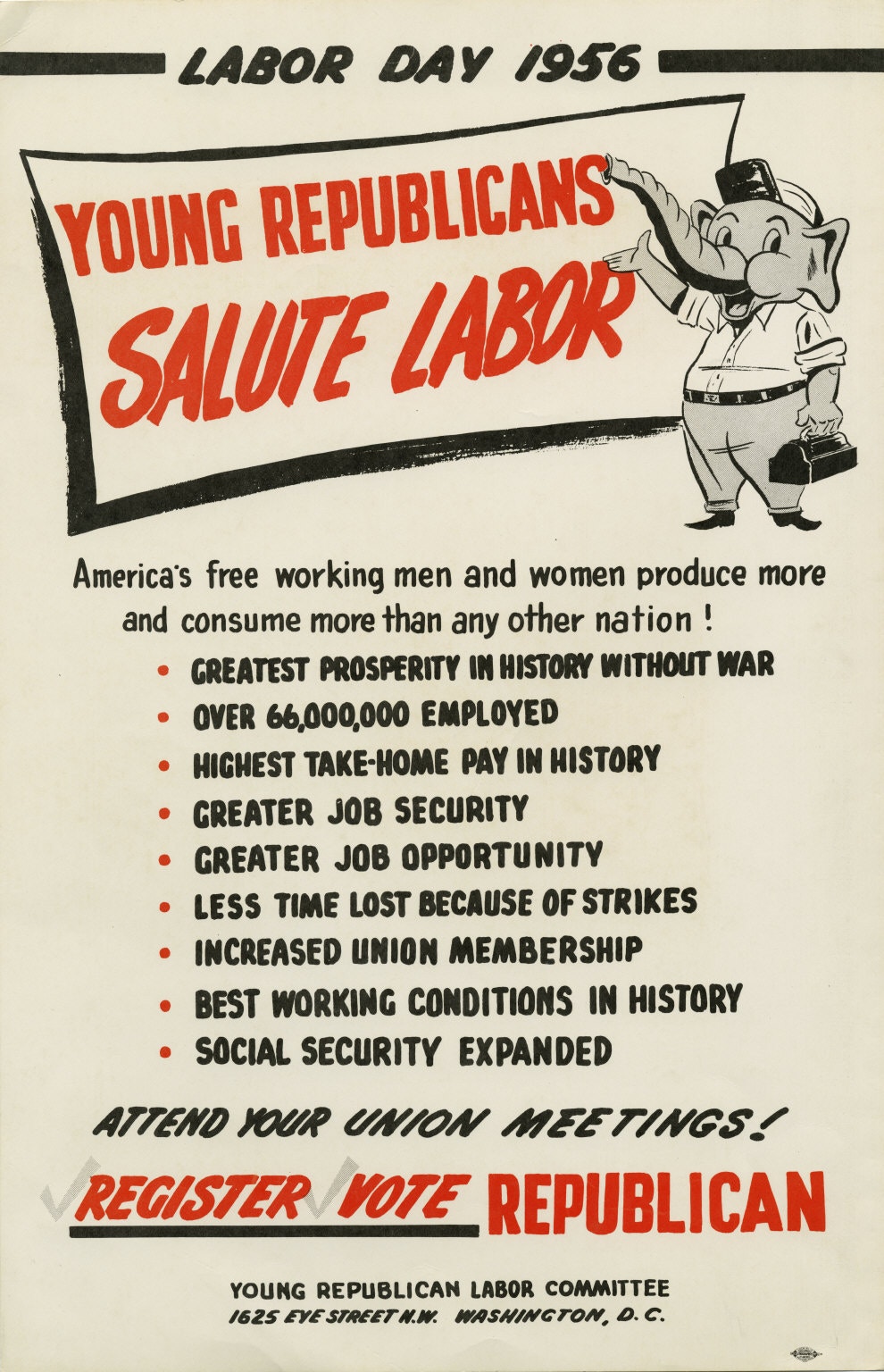
I have a skill that adds value to a company. They want to pay me to do it. I agree to the price. What's the problem? According to CA, a lot.