Amazon is known to be a disgusting swampy wasteland of intentionally deceptive knockoff garbage. Their warehouse policy of arbitrarily mixing stock is actively customer hostile in practice, and they know it, and they do nothing about it.
But that's not the interesting part. Consumer public need assurance that what they're being sold, NOT what they're buying, is safe. The difference is perspective. Regardless of provenance, it should never be the buyer's responsibility to gamble correctly on product safety.
You can buy a power strip with a two prong "figure 8" connector providing three grounded outlets. Try to sell that in a brick and mortar store, it would be closed, razed and the ground salted so they won't even try it next time.
A power strip like that isn't connected to the electrical ground in your house -- that would need a three-pin connection, and it only has a two-pin connection. Despite this, it has three-pin grounded sockets for you to connect appliances to it.
Three-pin appliances require a ground to be safe. By using a power strip like this, you're creating an unsafe configuration with a high risk of electric shock if there's a fault with an appliance.
Also, the little figure-8 connectors can't pass a high amount of current safely, and lots of 3-pin appliances are relatively high draw. That's a fire risk.
I'm not sure who's responsible for the enforcement in the US.
> Three-pin appliances require a ground to be safe
Can you elaborate on this?
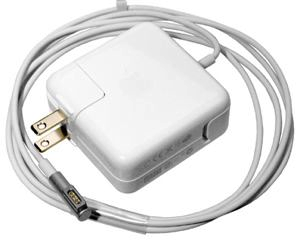
My MacBook charger has both a two-prong and a three-prong cable. Why would it be any more dangerous to plug my MacBook into this power strip using the three-prong cable than to connect it directly to the wall with the two-prong cable?
Your MacBook then is prepared for ungrounded operations. Now take a laser printer, it uses very high voltage on the inside and if something gets dislodged and touches an outer facing metal part and you touch that in turn, you are dead. That's why the outer parts are connected to a safety ground. Do note Xerox warns you not to use a "cheater plug" http://download.support.xerox.com/pub/docs/4400/userdocs/any... . Laser printers are also a great example of when that C7/C8 connection is a fire hazard because laser printers need a lot of power when heating up their fusers. This is also why you must not connect a laser printer to a UPS.
The MacBook chargers are designed to be safe without grounding.
The grounding pin does have a use, though: some cheap powered USB devices will put out a voltage relative to ground on their '0v' lines. If you touch a MacBook that's plugged into one of these devices, you can get a small shock. If you're using a 3-pin adapter, this doesn't seem to happen.
Exactly! I do not even know whether it's a bigger fire hazard or shock hazard. In Canada, curiously enough, it's Health Canada who would enforce a recall notice and fine you into oblivion. Look up the Canada Consumer Product Safety Act for more.
They're describing a power strip that has a 2-prong wall connector and offers three 3-prong outlets. This is dangerous, because equipment with 3-prong plugs needs to be grounded, and this power strip misleads you into thinking you've done that.
I rent an old apartment in the US, and no law requires the landlord to ground the wiring, so I actually need a power strip like that so that I can plug the strip into the wall and also plug 3 pronged electronics to it.
I know that it offers no grounding, that's a risk I have no choice but to take on my equipment because my building is not grounded. So I'm not sure someone selling a strip like that would be fined if my landlord isn't even forced to ground the building.
In that situation there are three safe and legal answers:
* Replace the wiring with grounded cable. Expensive.
* Replace the outlet with a GFCI and label it "no equipment ground". Gives most of the safety benefits of a proper ground, and is up to code. Not that expensive.
* Use a cheater plug [1] and connect the external ground tab to a pipe or something else grounded.
What you're asking for is basically a cheater plug plus an ordinary power strip, sold as one integrated unit. Better to keep them separate so that people know what they're dealing with. Also, what the poster upthread was describing didn't have a grounding tab, so there was no way to hook it up safely.
(The landlord isn't required to set up grounded outlets out of a general principle that you only need to bring things up to code when you're modifying it, and that something that was legal at the time it was installed stays so. Your unit could legally have knob-and-tube wiring if it's old enough!)
You have 3 "holes" in your power strip outlets: Line, Neutral, and Ground. Now, a figure-8 can only have 2 wires inside it.
So, it's likely that you have Line and Neutral connected, while Ground is "floating" (not connected). Which means that, if something goes wrong inside the appliance, it can be dangerous for other appliances, and more importantly for you, too.
Especially if there are exterior metal parts inside the appliance that are grounded and a wire is touching the metal from the inside, too.
The little circular lugs sticking out of that adapter are grounding tabs. You're meant to connect them to an electrical ground (which is sometimes possible in the US by screwing it into the faceplate of the wall socket). That lets you safely use 3-prong devices in a house that only has 2-prong sockets.
Of course, lots of people mis-use them, and when they do they're unsafe. I assume they're still on sale because they have a safe and appropriate use.
EDIT: I, personally, would never have one of the linked adapters in my house, simply because the risk of someone being an idiot with it without realising is too great. (I also come from the UK, where our plug and socket designs are nothing less than straight up paranoid when it comes to safety, and the US electrical setup seems unnecessarily risky to me. At least it's lower voltage...)
By the way this american type of plug looks pretty dangerous as it must be easy to acidentally or intentionally touch the pins while inserting it into a socket.
"Their warehouse policy of arbitrarily mixing stock is actively customer hostile in practice"
There isn't a "warehouse policy" per se. As a seller, you can choose "Stickerless commingled inventory" as an alternative to individually barcode labelling each item before you ship it to the Amazon warehouse (or paying Amazon a handsome premium to label them for you).
The risk as a seller is that your items are commingled with counterfeit equivalents, and that your seller reputation could be affected as a result.
We absolutely noticed. An Ethernet cable is being sold as 45000+ different products because it is uploaded as "Ethernet cable for HP X" "Ethernet cable for IBM Y" and so forth. It's incredible. I won't link the company but their name is like the "run command as root" command with the first vowel changed to be the same as the last. There are other cases, this is the most egregious I am aware of.
I've also been annoyed by Amazon lately. I am not sure it has gotten worse over the time, but I am sure that there is a lot of potential for improvement. The product sites are horribly cluttered and often even load slowly (on a 5 year old laptop). The home page is 6 MB in size! The product descriptions are also typically bad and it is often surprisingly difficult to find what you want (e.g. a laptop with specific specs). I always have the feeling there is some dark matter/inventory of things that no one considers, and hence no one writes reviews for, simply because the inventory is so poorly structured and the items have poor descriptions.
What brought me to use Amazon a long time ago was that they were selling themselves. It was one of the first reputable seller on the internet, that soon sold all kind of stuff. It was much better than buying from a dozen of unknown weird sites (depending on the product) for which I didn't have an account.
Now it's mayhem. There is no guarantee who is selling the thing, where it's coming from or what is the product I'm buying BUT everything is advertised as AMAZON.com.
I might as well buy stuff on eBay. At least it's clear who's selling.
You missed the part where sellers misrepresent sizes on their products, so you expect to order a human sized rack shelf (usually due to misrepresentative pictures) but it's the size of your foot.
Amazon banned Hoverboards from their site on Dec 12, 2015.
The family kept using the board despite this.
The house fire was on Jan 9, 2016.
Amazon announced full refunds on Jan 21, 2016.
The CPSC put out a warning on Jul 6, 2016.
The legal claim makes absolutely no mention whatsoever of Dec 12, 2015, and why the family kept using the board.
Amazon did not notify customers on Dec 12, 2015, only Jan 21, 2016. But this was all over the media - it was the lead story on the nightly news.
I get that this is pretty horrible for them, but I'm not convinced Amazon acted negligently here.
Amazon acted pretty quickly. How could they know ahead of time the boards would be dangerous? In between Dec 12 and Jan 21 it seemed they were trying to find good boards and get information - it doesn't seem like an excessive amount of time to do that.
"Amazon did not notify customers on Dec 12, 2015, only Jan 21, 2016. But this was all over the media"
But would it have been that difficult to generate a warning email (if not also surface mail to the ship-to address) to every buyer of an affected product after the 12/12 ban, given that they had all needed data immediately handy?
I don't disagree, but I'm not convinced it's worth $30 mil when at that time they were not sure it was necessary to warn people.
At that time it seemed like they felt they could find the good hoverboards among the bad (hence their program of asking for certification). Only later did they realize all of them were bad.
You know whats really amazing? I bought an aukey charger from amazon that ships with an ETL mark -- similar to UL, a claim that the product is safe and follows generally accepted practices -- that ETL didn't grant. ETL says on their website that it isn't a valid mark! I even told amazon and, while they did refund my money, they continue to sell it.
> "We've spent months investigating it and to this day I don't know who manufactured this product, and it doesn't appear that Amazon does," Anderson said. He said Amazon charged and shipped the hoverboard.
The amount of fake product complaints I see in reviews on Amazon now is pretty incredible. They really need to figure something out with regard to controlling their inventory.
Uh, also, why is this article playing a 53 second jazzy soundtrack? Is this a new method of fighting off adblockers? You're gonna throw me nice jams instead of your video? I'm down.
www.gannett-cdn.com/360player/comscore/streamsense.5.1.1.160316.min.js:8 getClip() is deprecated. Use getPlaylist().getClip() instead.
What's funny is that if you are not a registered reseller of certain products, they product's manufacturer will flag your account as a 'copyright violation' claiming you don't have permission to sell their intellectual property (because you are selling it at less than the MSRP and hurting their bottom line by advertising one item at below their decided price,) and as a seller you have no choice but to comply or have your seller account suspended. The whole system seems automatic and though you reply to every message indicating there is no intellectual property violation as your products are genuine they are ignored. I have definitely bought a knock-off iPod from China on Amazon, too.
I watched a vid some time ago about "who exactly invented the hoverboard" - it was really interesting... I can't find it right now, but if I find it - ill post it.
I am finding it increasingly difficult to know how much to trust items to buy on Amazon.
It used to be fairly obvious which was a "third party seller" and which was Amazon (as in one company that sourced manufacturer products, bought them and shipped them). These days I basically click through to purchase and try to guess from the amount of P&P if they are Amazon, fulfilled by Amazon or some guy in his garage.
And why can't fulfilled by Amazon actually be on the product description !
This is another example of Internet enabling business models that law and society have not quite kept up with.
Amazon probably don't have a strategy of confuse the shit out of the customer, but they can twist their business model so many times that's what has happened.
And why can't fulfilled by Amazon actually be on the product description !
That’s weird. In the UK it absolutely is: you can tell on the product page whether you’re buying something sold by Amazon themselves or "fulfilled by Amazon". Items sold by Amazon have the text "Dispatched from and sold by Amazon" in the product description whereas an item from another seller will contain the text "Sold by <seller name> and Fulfilled by Amazon" or "Dispatched from and sold by <seller name>".
EU consumer regulation is notoriously stricter than in the US, so maybe it’s a legal requirement?
I know to do that and I have still had bad experiences. I am pretty sure Amazon does not have a simple/transparent way to do this. They certainly don't have a search tool for this, which would be necessary for it to matter anyways.
The following works in the UK, but weirdly only for some seraches: Search for "item of choice" in top search bar. When the results come up, scroll down until you can see the "Seller" section on the LHS. Tick the box at the top marked amazon.co.uk
Why some searche results have the Seller list on the LHS and some don’t I’ve no idea.
Interesting news. The result of this verdict may set a precedent to further curtail online sales of electronic goods from questionable manufacturers (read relatively cheap).
The only question is whether this will lead to a more booming underground economy for folks who are more risk friendly.
I've always thought Amazon were very exposed with their handling of the 'fulfilled by Amazon' stock.
AFAICT - with these items, a seller can send them in bulk to an Amazon warehouse and they'll all be put into the same box. So, a (for example) set of Sennheiser headphones sold by Amazon themselves can be in the same box as a fake set sold by a third-party seller, as long as the EAN is the same.
I've had this previously with Sennheiser headphones - sold by Amazon, on their site, and I got the fakes. I just didn't think about the idea of it including items where the fakes were unsafe.
It tells you it's fulfilled by Amazon. They're referring to the shipment. A lot of Prime members don't buy non-Prime/Amazon shipped items because of the shipping delays. I myself am one of them.
Could have been, but I know they were fake by comparing the ones I received from Amazon with those in a local store - packaging was suspect compared to these, as were the headphones themselves.
This doesn't surprise me at all, I've completely stopped shopping at Amazon since it is impossible to determine the quality of a lot of the goods on their site. It seems to take longer to research what is worth buying versus going to the store and finding something that looks like it is good quality.
Sue the pants off of them... maybe it will get Amazon to crack down on what they're willing to sell (or host the sale of) before it's a completely lost cause.
I used to really appreciate Amazon, but in the last couple of years it's become a bad joke.
While is tragic they had to rescue their kids from a burning house .. this is funny .. " It alleges the family was sold a counterfeit product from China instead of a brand with a Samsung lithium ion battery they believed they were buying from Amazon"
I'd be glad to see Amazon (or anyone selling faulty products) pay for the damages.
I don't understand how 'destroyed a 1mil house' turns into 30mil. This "pay for the immaterial damage you've done" (assuming that the 1mil contains most of the furniture etc. and that the rest of their belongings don't come close to 29mil dollars) attitude is strange, hard to grasp here.
If you don't fully grasp the American legal system it does seem silly. Basically, the idea is that this falls in the civil court system. I.e. you're wronged, so you sue for damages. However, one of the main reasons why you can sue for 30M and not for the price of the loss is the concept of punitive damages. If Amazon loses 30 and not 1M,they're less likely to allow the wrong to happen so easily again.
In places like France, you can't sue for 30M, but you can maybe sue for what you lost. At the same time, the criminal laws are more likely to affect corporations via regulations and even legal action. Thus, the philosophy in the US is, less government regulation, more emphasis on non governmental interference in private entities working out their differences with the government only as impartial judge.
Hence it's very important for individual consumers that we be able to sue for these ridiculous sums. It's the only disincentive for the Amazons and other powerhouse corporations from getting away with such things as a fire caused by negligence, and their writing it off as a business expense. The expense needs to be high.
Thanks a lot for the explanation. I think what I mostly don't get is
a) isn't "replace 1mil+ for a product that costs 100" (pulled that number from thin air, no clue what these things cost) already punitive? The replacement cost eats the profit for a HUGE number of sales already, no?
b) the arguments for the _specific_ number seem completely arbitrary and scaling in ways I cannot understand. It's not "our home was destroyed, pay to replace it and pay for another house on top, because we have to replace all the stuff inside and the experience was crazy". It's "our home was destroyed, pay us enough to buy 2 dozen of these homes with a lot of room to make every single one of these 24 homes look nice as well".
That scales in ways that are utterly alien to me. If you can somehow defend your request for 30mil, why not 50? 100? As soon as you enter 'emotional damage' (hard to quantify) or punitive damages (the more the better, right?) I fail to see how you come up with these numbers.
Then again, I'm not saying it's silly. It's just completely confusing for me and I DO feel better about the local system. It is an entirely different culture and I'm trying to point this out in a thread that so far is full of "Yeah, makes sense" posts. Internationally it might not be that one sided.
a) The manufacturer must at least reimburse the damages he's done with his product.
Otherwise anyone can manufacture explosive broken fire-trigerring devices. There's no point of making a device 'safe' if a $1 device can't pay back more than $1. The only incentive is to make stuff cheap, ignore safety, risks and regulation.
If the manufacturer must close, so be it. Better that than dead people.
b) The scale is American. They sue for very high amount (higher than just the reimbursement), as the previous poster was explaining.
Your first point misses what I was saying (or I was bad at saying it). Of course you pay for the damages caused, not the product's price. In the case here I expect someone (Amazon? Whoever) pay for the 1 million plus to replace the house.
I brought up the product price just because I feel that paying more than a million in damages for a product that costs (say..) 100 dollar is already punitive in terms of business. Whoever has to pay even 1 million probably will be quite unhappy about carrying that product, without any further inflation: The price for this accident eats the profit for a BIG number of sales - ignoring the PR issues.
So: Sure, if you sell a $1 device that causes $1,000,000 in damages, pay a million (or more). But paying a million (or more) caused by a $1 device seems already like a decent way to make the business .. reconsider some practices?
If you are making $100 milling in profit off of a faulty device, then $1 million is just the cost of doing business. A penalty has to be painful enough to the company that they don't want to do this again. Given how large Amazon is, and how their marketplace is a nightmare of consumer fraud, I think $30 million is not enough of a penalty to make them clean up their act.
For more on this, I suggest reading "Unsafe at Any Speed" by Ralph Nader.
Are you arguing about the case in this article or about general issues you have with the Amazon marketplace? Text is a crappy medium, this is not my native language, but you seem to have a problem with Amazon regardless of the issue in the article?
If 30 million isn't enough, what would be enough? "All the profit of this product"? "All the revenue based on this product"? And .. would you award that to some random party? Because that's what this is about as well, no? Someone was hurt (financially, emotionally) and now there's supposed to be a pay out. Would you suggest giving the "victims" 100 houses for the one house they lost? One party/family should be able to own a small village of luxury houses to hurt Amazon?
I'm going to retire from this thread - it's past midnight and I was confused a long time ago. Further arguments make this process only _more_ alien and I certainly don't want to convince the US population that they Should Not Do This.
But there's no way in hell to integrate this process with my upbringing - it feels entirely wrong and far too much like a cash grab. Chalk it up to cultural differences?
Cultural differences? Maybe, but not in the way you think. It's cultural in the political philosophy more than anything else.
Let's summarize it thusly: the U.S. regulatory system, while not totally a free market, is a lot less stringent and red-tape-heavy than places like the EU. HOWEVER, you need a disincentive for 'bad actors' to cause harm, and in the U.S. we rely more on tort law ("wrongs") than in the EU, where things are more tightly regulated (in theory). It's a matter of degree. Rather than risk fines or even, in some cases, jail time, in the U.S. companies are afraid of getting sued, and thus you see all those 'don't put your finger in the socket' 'this knife is sharp, be careful' type notices on consumer products. The cultural aspect is around the idea that government shouldn't interfere overly in the market. The country was founded on the ideas of philosophers like Adam Smith.
If 30 million isn't enough, what would be enough? "All the profit of this product"? "All the revenue based on this product"? And .. would you award that to some random party? Because that's what this is about as well, no? Someone was hurt (financially, emotionally) and now there's supposed to be a pay out. Would you suggest giving the "victims" 100 houses for the one house they lost? One party/family should be able to own a small village of luxury houses to hurt Amazon?
Good question, and sometimes class action lawsuits (involving hundreds, or even thousands of people) happen. Note, the point of 'punitive' is punishiment. Disincentive. Don't do it again. It's up to lawyers / juries to 'decide' what the renumeration is. As to whom goes a bulk, well, you can rest assured law can be a lucrative profession for a reason.
> I brought up the product price just because I feel that paying more than a million in damages for a product that costs (say..) 100 dollar is already punitive in terms of business. Whoever has to pay even 1 million probably will be quite unhappy about carrying that product, without any further inflation: The price for this accident eats the profit for a BIG number of sales - ignoring the PR issues.
It's actually similar to the manufacturer's side here.
As the poster above said, if the manufacturer doesn't have to pay more then the cost of the product, then there's no incentive for them to worry about safety, since they'll at most lose the cost of a product.
Similarly, if all a retailer has to worry about is losing the cost of a product line, then there isn't any incentive for them to care if the products they sell are safe: if one isn't, they just stop selling that line, and there's no reason for them to vet them ahead of time. But if they can lose more than a single product line 's worth of product, then they have to care that they're not selling dangerous junk.
Punish/hurt the company with punitive damages, big enough to discourage negligent behavior - 100% on this
Compensate the victims with amount equivalent to their loss(physical) + some decent compensation for emotional losses etc. But that need not be 30X of their actual loss. May be 2x or 3x. The rest of the punitive damages should be awarded to the regulatory body that can improve their oversight, or to a public research body that works on fire safety alarms/products etc for example, or to a public cause/charity that helps fire hazard victims or to a publicly funded affordable fire hazard insurance body etc. I see no need to award all the punitive damages to a single victim. This only encourages the 'sue first and for anything' behavior of the society.
You make an interesting point. I will (no snark, I'm serious) try to figure out how this works in my home country and in Europe in general. Because .. I assume they have a strategy for this as well and 'pay a private party a lot of money' isn't something that's possible in Germany.
But .. I'm too ignorant to know WHAT the strategy is over here, how companies would be/are being reigned in. Homework.


Amazon is known to be a disgusting swampy wasteland of intentionally deceptive knockoff garbage. Their warehouse policy of arbitrarily mixing stock is actively customer hostile in practice, and they know it, and they do nothing about it.
But that's not the interesting part. Consumer public need assurance that what they're being sold, NOT what they're buying, is safe. The difference is perspective. Regardless of provenance, it should never be the buyer's responsibility to gamble correctly on product safety.