1. Borg precedes K8s and likely is tightly coupled with Google's backend infra - that's to say, Borg gets architected around Google's existing workflow and new backend development is written around Borg's workflow.
2. GoLang was never intended to be an OS-level programming language. It was created to enable more robust, efficient, and rapid development in a particular space. It would be just as silly to argue that Google's three OS projects all eschew Dart.
Go was created by three folks that got fed up waiting on C++ compile times, and from their point of view Go is designed for people unable to take feature rich languages, on Rob Pike's own words.
"The key point here is our programmers are Googlers, they’re not researchers. They’re typically, fairly young, fresh out of school, probably learned Java, maybe learned C or C++, probably learned Python. They’re not capable of understanding a brilliant language but we want to use them to build good software. So, the language that we give them has to be easy for them to understand and easy to adopt."
Or alternatively,
"It must be familiar, roughly C-like. Programmers working at Google are early in their careers and are most familiar with procedural languages, particularly from the C family. The need to get programmers productive quickly in a new language means that the language cannot be too radical."
I'm not actually criticizing GoLang, just pointing out some facts.
1. is fair.
2. I'd argue is false, given Fuschia and Dart are tightly integrated (as another commenter noted) and that GoLang was originally designed as a C++ replacement born from the Plan9/Inferno tool chains (certainly "OS-level"). Also there's a ton of non-kernel code in an OS so this is a really blurry distinction. containerd does some pretty low level stuff with Linux and GoLang is perfectly capable of this.. if Fuschia wanted to use it they could.
Backspace has traditionally been a back button shortcut. In a similar complaint, the current key combo to navigate back across all platforms doesn't perform that action when a textbox is focused.
Using collusion without knowing what it means... Businesses make business deals all the time. If I had a company that made an inferior product and wasn't able or willing to invest time and resources to improve it, you know sure as hell I'd look to sell that product IP off before my competitors take all of my marketshare anyway and my company gets nothing for years of pre-existing work.
That's a sensible business move that lets them allocate resources to their strengths. To believe it's some kind of secret or illegal deal is pretty naïve. It's obviously not a mistake either - Hipchat is technologically behind other products on the market, and Atlassian has other core products that are doing really well (JIRA, for example).
I'm sure there's a fair amount of business logic between what's in the database and what's delivered to the presentation layer. Pulling from a database means that the new company has to reverse engineer Hipchat's API implementation.
I wonder if this is one of the reasons why the phone system standardized on 48 volts. With DC, you need to get above about 60 volts to have any chance of lethality. If someone were to grab the barbed wire, they'd get a jolt, but it wouldn't kill them.
When I was in kindergarten in the late '50s, I pranked my class with electricity. I had a big fat electrolytic capacitor that I charged up before bringing it to school, and a screwdriver.
I don't remember the exact voltage I charged the cap up to, but it was definitely only a few volts.
So for show and tell, I explained how electricity worked, and then I grabbed one of the cap's terminals in each hand and started twitching and shaking like I was being electrocuted! Finally I somehow managed to break free, took a deep breath, and told my classmates "don't be as foolish as me."
To protect them from the danger, I then took the screwdriver blade and shorted it across the capacitor's terminals, with a big spark and a loud bang! Clearly, this cap had enough power to kill you.
I told my classmates, "Now it's safe. I discharged it. You can touch it now."
And they did. Nobody was harmed.
School was great back in those days. When I got to third grade and I wanted to etch a printed circuit board, I told my teacher I needed a tank of nitric acid, and she got it for me! But that is a story for another day.
Oh, I loved those Radio Shack all-in-one kits too - the spring connectors made it so easy to wire stuff up. Also did a bunch of Heathkits a few years later - color TV for the family, ham radio gear for myself, etc.
I was trying to remember my first experience with electricity and electronics, and it finally came back to me. Whenever our TV or radio went on the fritz (which happened quite regularly), I got to pull out all the tubes, and my dad would take me to the local convenience store where they had a tube tester. I would put each tube in the tester and learn what to set the dials to and what to look for on the meters and figure out which tube was bad. It was a great adventure!
Yes, it is technically true that it is the current that disrupts the heart rhythm. Theoretically, a 9v battery can supply enough current to cause a potentially fatal heart arrhythmia, if it's shorted through a person's blood. But it's also being pedantic.
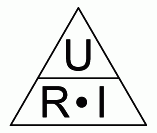
Consider Ohm's Law: `I = V/R`. Why is it so frequently printed in this way, rather than the simpler `IR = V`? If we don't care about simplicity, why not `V = I/R`? What is special about `I = V/R`?
Resistance--be it your work load or your human fleshy bits--is usually roughly considered a constant--or at least a known--for a given application. And most power sources that you'll encounter in the wild are voltage-controlled and able to supply practically as much current as you want (aka "more than enough to kill you"). So Voltage is the independent variable, leaving Current to be the dependent variable.
While it is true that "it's the current that gets ya", it's the voltage over which we have control, so we tend to focus on that instead.
I always learned Ohm's law as, "V = I*R". You know, over the handful of classes that included it at some point. When you say 'Ohm's law,' my brain says 'vee-equals-aye-arr.' So...I did check wikipedia first to make sure I wasn't having a stroke, but I think 'V=I/R' is a typo.
Anyways, that does seem fairly self-explanatory. More volts means more current with the same resistance. More resistance means less current with the same voltage.
FWIW, I was always taught Ohm's law as V=IR (GCSE and A-level Physics/A-Level Electronics/BA Computer Science). I don't recall ever seeing it printed as I=V/R except where a calculation called for that form.
Yup, the resistance of your skin drops in the rain or heavy perspiration. While it's a nice mitigating factor it's better to just not mess around with anything that can deliver high voltage or high current.
There's a 1999 Darwin Award for this, even. A 9v multimeter killed someone because he broke his skin with the probes and lost the benefit of that resistance. That's pretty much a worst-case scenario, but it's still a vivid reminder that "low voltage" is not "safe".
This was one of the big mistakes made by OS/2 when they were competing against Windows. They created a compatibility layer for Windows applications, which meant that developers never wrote native apps for their platform, leading to a very poor user experience and gave Windows a leg-up on its competition. I doubt Microsoft wants to make the same mistake.
Just a quick nitpick, I would like to see the links expand to their entire <p> parent elements, so the entire box is a clickable link, not just the text inside.
My most hated at the moment? Those ads that hijack page scrolling and don't let go until you've scrolled the ad past. Wouldn't be a huge problem if it didn't totally fuck up my browser's scrolling functionality and lag things out.
Disable scripting, use wallabag to read the content (or a similar readability service), just leave the site and let them rot or find the contact info and tell them why you hate them now.
It's about the same as how you'd approach modern programming, except instead of watching variables you'd watch registers and addresses in RAM/VRAM and work backward from there. Hell, you could even look specifically for instructions that manipulated those addresses.


1. Borg precedes K8s and likely is tightly coupled with Google's backend infra - that's to say, Borg gets architected around Google's existing workflow and new backend development is written around Borg's workflow.
2. GoLang was never intended to be an OS-level programming language. It was created to enable more robust, efficient, and rapid development in a particular space. It would be just as silly to argue that Google's three OS projects all eschew Dart.