You know companies are allowed to pay people to find vulns, and pay people bug bounties?
Instead of that, you’d rather make the law compel free individuals to limit their speech, or to hand over their work to big companies privately, so big companies can save money?
That doesn’t sound like a nice future, if it’s even enforceable at all.
They say it is at least one order of magnitude[1]; "our plan to increase GitHub’s capacity by 10X in October 2025 .. By February 2026, it was clear that we needed to design for a future that requires 30X today’s scale."
Start: "I paid over two thousand dollars for this, used! Why are they so expensive? Other folding bikes are half the price and offer more, the gear shift is confusing and doesn't work properly, all the parts are overcomplicated and proprietary, >:-("
End: "I really like this bike. I'm so impressed with the build quality."
Comment a year later: "I've owned my Brompton for well over a year now, and absolutely love it. It's one bike I will absolutely never sell. The gear shifting was indeed a point of confusion for me, as there were two variables. 1. I had zero experience with Sturmey Archer hubs 2. The cable needed tightening. .. I'll often choose to bring my Brompton places not because it's portable, but rather because the bag and rack are so functional. Having your cargo down low makes it really stable, and being able to remove the bag so easily is super convenient."
> "if I really got into the hobby, perhaps I'd try to hack together an ultralight custom "BrompNot," something like the T-line but customized to my own needs"
Yes it is, that's why you can get a bike from Walmart for $200.
This is like asking why new Mercedes costs so much when your used beater was very cheap. Last year Ford sold 4,500,000 cars. Honda sold 1,430,000 cars. Brompton sold 85,000 bikes. They make them in London, not overseas, so that costs more, and they don't have the economies of scale that car companies have. Brompton are also a luxury brand, with a reputation for a quality product that can last decades, they're not aiming at the low end of the market.
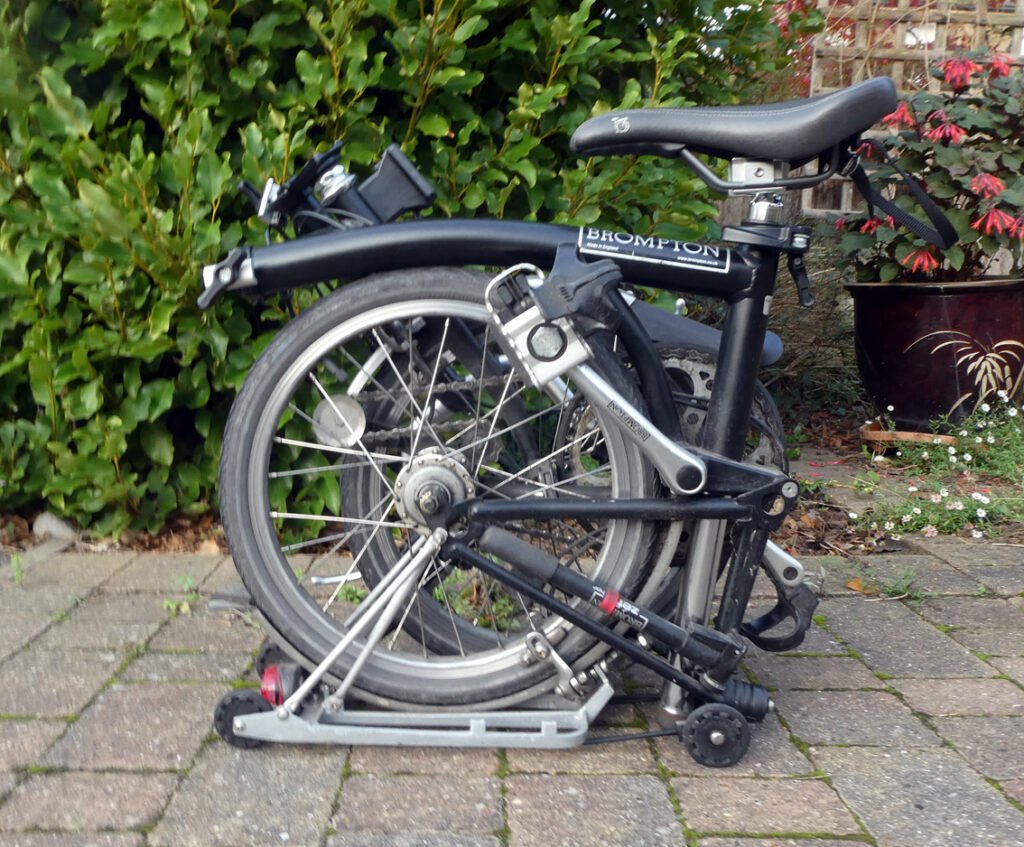
- folds in 3 pieces (tri-fold) instead of folding in half (bi-fold). It was innovative at the time, is more common now. That makes it fold smaller than bi-fold bikes.
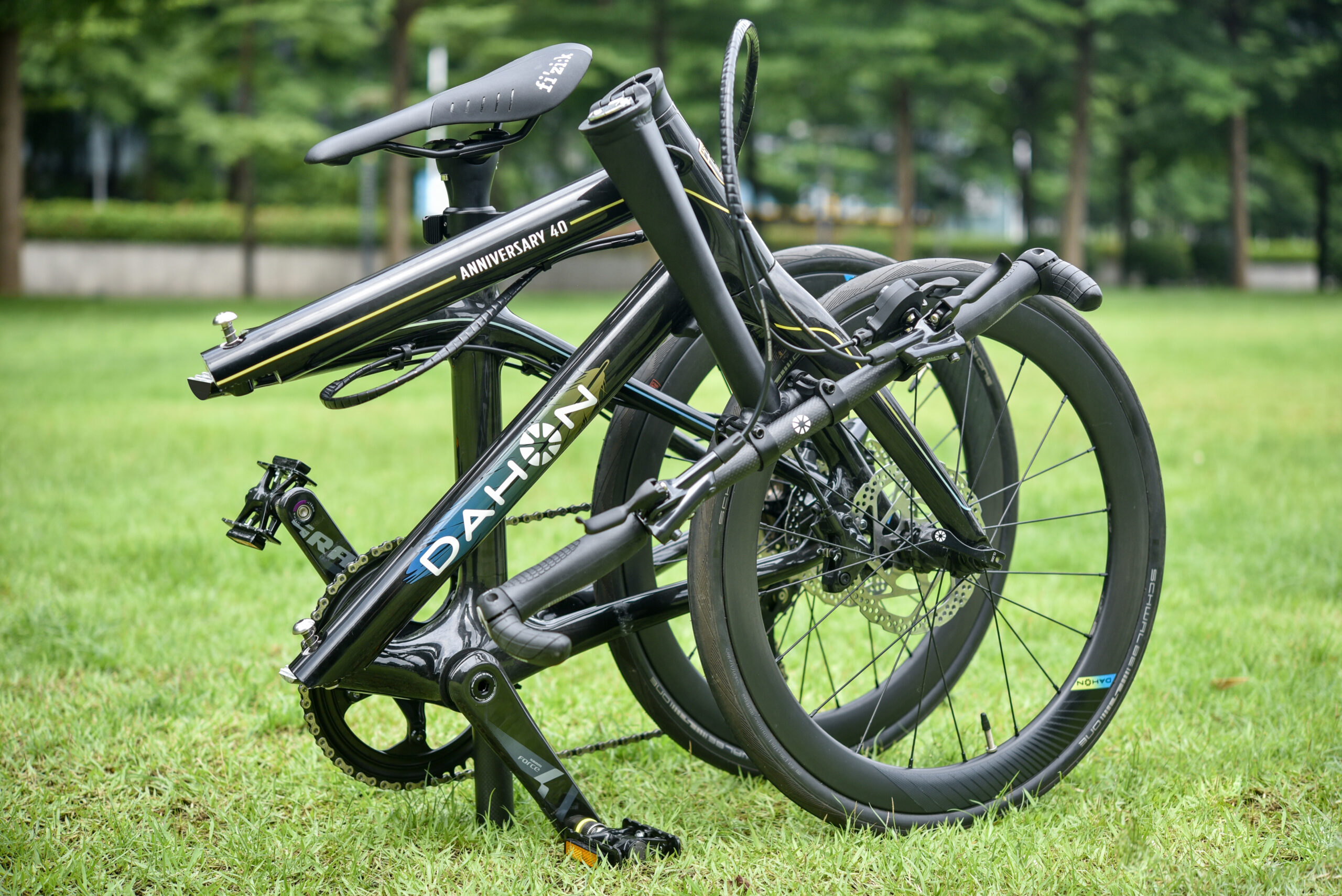
- keeps the oily chain and chainrings in between the wheels. Some other bikes which only fold in half have the oily bits on the outside[1], and/or the chainring sticking quite far out[2]
- When folded, the mucky main wheels are lifted off the ground by the little roller wheels[3].
- Brompton folds into almost a square which can stand up on its own, or pack reasonably neatly into a box, bag, or trunk. Other bikes can be more pointy, less convenient shapes when folded. e.g. [1] the bar grips stick out, the pedal sticks out the other side, the front chain ring sticks out.
- Brompton is useful partially-folded. With just the rear wheel tucked under it will stand up on its own. With just the seat or just the handlebars unfolded it can be wheeled around on the little roller wheels like a suitcase. It can be folded while leaving the front bag on without the bag going upside down, and with the bag accessible to wheel around using it like a shopping trolley.
- When folded, the top-tube of the bike is along the top of the fold, so is the seat, giving decent balanced places to lift and carry it like a suitcase.[4]
- One side has a folding pedal to tuck it away. The other side doesn't. I just think it's neat.
- Maybe goes without saying, but it can be folded without tools instead of being disassembled. Full size bikes can have joints in the frame so they come apart for packing for travel, but you just get a pile of separate pieces. Some medium size folding bikes need a wheel removed and only really fold for packing into a car, rather than something you'd do on the fly for a train trip. "Folding bikes" is not unique to Brompton, but in the market of "all bikes which can be made smaller", folding was a thing Brompton made mainstream, partly by inventing a fold that was so convenient.




Instead of that, you’d rather make the law compel free individuals to limit their speech, or to hand over their work to big companies privately, so big companies can save money?
That doesn’t sound like a nice future, if it’s even enforceable at all.
reply