Hmmm, the Y axis of the graph is tough to interpret.
Isn't it kind of weird to use a percentage for a line graph? With percentages, the goal is to provide an obvious fractional breakdown, that viewers can readily sum to 100%, visually.
I have no idea how to sum a curve and reconcile back to the original universe.
If the complete set of links in this data is a count of 12,373 links, then how many have decayed? Based on that graph, I have no idea.
Considering how many people liked google's desktop search widget, and similar, I'm not sure I agree... not to mention that seeing repository matches that aren't installed (yet) can be useful too. Not that most of those features require integrated online searches... but I can see how someone, even most casual users would prefer it that way.
Hell, look at how many people type in website addresses into their search box.
I know what you mean. Somewhere, out there, we'll find an MBA-type, trying to paste an Excel spreadsheet into one of those tabular data types, and a black hole will open up and swallow the Earth whole.
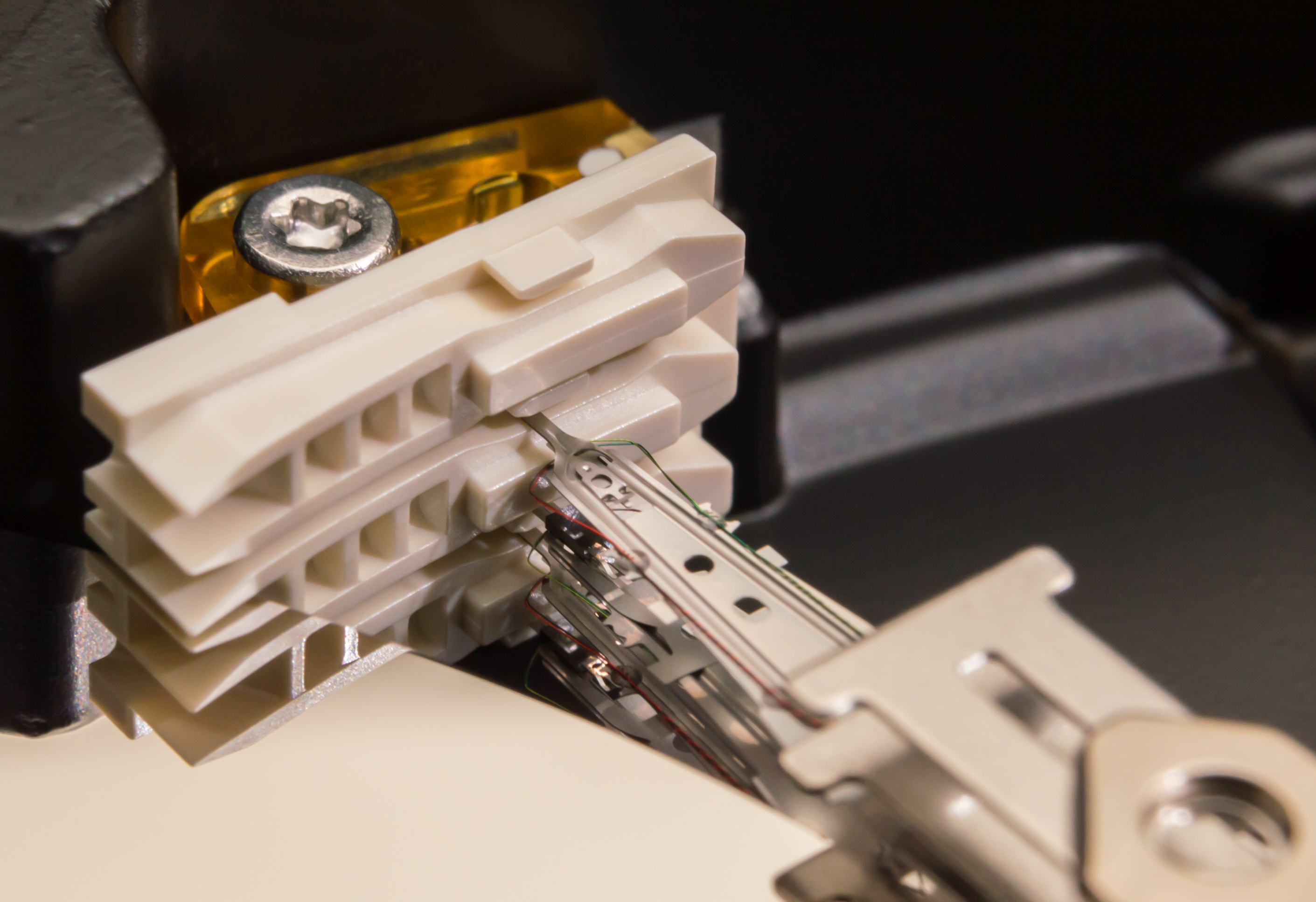
Eliminating drag. Because the head uses air pressure to keep itself off the platter, that air is also going to be pressing against the drive, causing friction, and requiring the motor to work a bit harder. By parking away from the platter altogether, you're eliminating that source of drag and friction. Regarding the orange widget, the damage happens over hundreds of thousands of park and unpark cycles -- a little wobble and a little rubbing after each one, which will eventually be enough to get things out of alignment and thus, broken.
The difference between near the rim and near the spindle is that air pressure. If it's near the spindle, it still has that drag that's making the motor work harder. Near the rim, that pressure is gone.
It just seems strange that there needs to be an orange widget to act as a "landing zone" at all.
Why not park the heads hanging in free space? Ostensibly the plastic widget is probably a guide rail to prevent head crashes, when the head unparks onto a platter spinning at full speed?
There's a short whitepaper published by HGST (now part of Western Digital) which discusses the history and benefits of the ramp load-unload mechanism [1].
The heads (the one above and the one below the platter) would crash into each other if there is nothing to keep them apart, and then you could not put them back on the platter.
So, an individual buys a one family home, at a convenient location, with the intent of renting it out as an income-producing property. The person pays extra money, since a more desirable piece of property is more likely to stay occupied and produce rent.
The owner gets it ready for rental, and selects a rental price. The rental price covers the costs of buying the property, improving the home, paying taxes, and a percentage to ensure repairs and upkeep over time, with the hopes that a portion of the money dedicated to upkeep will eventually become profits, depending on tenant churn.
Someone shows up seeking to rent, and just happens to make less than the magic number (under 20K for example), so the owner has to forfeit the portion of the price that covers taxes and upkeep.
The owner is expected to make a decision that will turn a potential source of income into a potential burden, which risks falling into disrepair. How then is this decision expected to play out?
Cool-kid words for cloud infrastructure in-groups. Somewhere along the line someone with clout and a laser pointer directed the attention of a roomful of people to an analogy in a Powerpoint presentation, and to curry favor and demonstrate loyalty, dear leader's clones started parroting each neologism.